

With Ed Snowden's NSA-leaking, the need for L4 as a modular, transparent operating system becomes even more obvious, and Linux with its monolithic/oligarchic architecture (and culture) becomes increasingly dangerous, and Windows might capitulate to the ultra-quick buck. Link below-right leads to my "crucible" on oddmuse where I do my "status updates."
About
The goal of the Linux-Society (LS, dating back to the mid-90s as a professional club and tech-mentoring group) has been a purely-democratic Information Society; many of the articles are sociological in nature. The LS was merged with Perl/Unix of NY to form multi-layered group that included advocacy, project-oriented learning by talented high school students: textbook constructivism. Linux has severe limitations such that it is useless for any computer that will, say, print or scan. It is primarily used for webservers and embedded devices such as the Android. (Google is high-invested in it).
Technology is problematic. During the heyday of technology (1990s), it seemed it had the democratic direction Lewis Mumford said it should have in his seminal Technics and Civilization.
Today, we are effectively stuck with Windows as Linux is poor on the desktop and has cultured a maladaptive following. Apple is prohibitive, and all other operating systems lack drivers, including Google's Android, an offshoot of linux.
In the late 90s there was hope for new kernels such as LibOS and ExoOS that would bare their hardware to programs, some of which would be virtual machines such as Java uses. Another important player was the L4 system that is a minor relation to the code underlying the Apple's systems. It was highly scientific but fell into the wrong hangs, apparently, and has suffered from having no progress on the desktop. There is a version, "SE" that is apparently running in many cell phones as specialized telecom chips, but is proprietary. SE's closed nature was only recently revealed, which is important because it is apparently built from publicly-owned code as it is not a "clean room" design it may violate public domain protections, and most certainly violates the widely-accepted social contract.
Recent attempts to enjoin into L4 development as an advocate for "the people" have been as frustrating (and demeaning) as previous attempts with the usual attacks to self-esteem by maladaptive "hacks" being reinforced by "leadership" (now mostly university professors).
In short, this leaves us with Windows, which is quite a reversal if you have read earlier posts here. But, upon Windows, we have free and open software development systems in the forms of GTK+ (the windows usually used on Linux) and the Minimal GNU Windows (MinGW and MSYS) systems. It is very likely this direction that development should go (that is, on Windows) such that s/w can then be ported to a currently-valid microkernel system that includes a driver system that can be adapted by hardware developers to reuse of their windows and apple drivers.
From a brief survey of L4, it appears that the last clean copy was the DROPS system of the early 2010s, was a German effort that used the Unix-like "OS kit" from an American University.
If we are going to be stuck on Windows, then it seems that a high level approach to free and open systems integration, such as creating fully transparent mouse communication between apps so that they can seamlessly work together as a single desktop (rather than deliberately conflicting). This would be very helpful for GIMP and Inkscape, both leading graphics programs that are strong in the special ways, but suffer from an inability to easily interrelate.
Another important issue is the nature, if you can call it that, of the "geek" or "hack." Technology is formed democratically but "harvested" authoritarian-ly --if I can coin a term that Mumford might use. Authority is plutarchy: a combination of aristocracy and oligarchy that is kept alive after all these millennia by using, or maligning, the information society as a part of the civilizing (or law-giving) process that embraces the dialectic as its method. Democratic restoration, that is to put humanity back on an evolutionary (and not de-evolutionary) track, I think, will require the exclusion of the "geek" from decision-making. As is, the free/open s/w culture attempts to give leadership to those who write the most lines of code --irrespective of their comprehension of the real world or relationship with normal users. We need normal people to somehow organize around common sense (rather than oligarchic rationalism) to bring to life useful and cohesive software and communications systems.
Interestingly, the most popular page on this site is about Carl Rogers' humanistic psychology, and has nothing to do with technology.
Technology is problematic. During the heyday of technology (1990s), it seemed it had the democratic direction Lewis Mumford said it should have in his seminal Technics and Civilization.
Today, we are effectively stuck with Windows as Linux is poor on the desktop and has cultured a maladaptive following. Apple is prohibitive, and all other operating systems lack drivers, including Google's Android, an offshoot of linux.
In the late 90s there was hope for new kernels such as LibOS and ExoOS that would bare their hardware to programs, some of which would be virtual machines such as Java uses. Another important player was the L4 system that is a minor relation to the code underlying the Apple's systems. It was highly scientific but fell into the wrong hangs, apparently, and has suffered from having no progress on the desktop. There is a version, "SE" that is apparently running in many cell phones as specialized telecom chips, but is proprietary. SE's closed nature was only recently revealed, which is important because it is apparently built from publicly-owned code as it is not a "clean room" design it may violate public domain protections, and most certainly violates the widely-accepted social contract.
Recent attempts to enjoin into L4 development as an advocate for "the people" have been as frustrating (and demeaning) as previous attempts with the usual attacks to self-esteem by maladaptive "hacks" being reinforced by "leadership" (now mostly university professors).
In short, this leaves us with Windows, which is quite a reversal if you have read earlier posts here. But, upon Windows, we have free and open software development systems in the forms of GTK+ (the windows usually used on Linux) and the Minimal GNU Windows (MinGW and MSYS) systems. It is very likely this direction that development should go (that is, on Windows) such that s/w can then be ported to a currently-valid microkernel system that includes a driver system that can be adapted by hardware developers to reuse of their windows and apple drivers.
From a brief survey of L4, it appears that the last clean copy was the DROPS system of the early 2010s, was a German effort that used the Unix-like "OS kit" from an American University.
If we are going to be stuck on Windows, then it seems that a high level approach to free and open systems integration, such as creating fully transparent mouse communication between apps so that they can seamlessly work together as a single desktop (rather than deliberately conflicting). This would be very helpful for GIMP and Inkscape, both leading graphics programs that are strong in the special ways, but suffer from an inability to easily interrelate.
Another important issue is the nature, if you can call it that, of the "geek" or "hack." Technology is formed democratically but "harvested" authoritarian-ly --if I can coin a term that Mumford might use. Authority is plutarchy: a combination of aristocracy and oligarchy that is kept alive after all these millennia by using, or maligning, the information society as a part of the civilizing (or law-giving) process that embraces the dialectic as its method. Democratic restoration, that is to put humanity back on an evolutionary (and not de-evolutionary) track, I think, will require the exclusion of the "geek" from decision-making. As is, the free/open s/w culture attempts to give leadership to those who write the most lines of code --irrespective of their comprehension of the real world or relationship with normal users. We need normal people to somehow organize around common sense (rather than oligarchic rationalism) to bring to life useful and cohesive software and communications systems.
Interestingly, the most popular page on this site is about Carl Rogers' humanistic psychology, and has nothing to do with technology.
Saturday, April 12, 2014


Wednesday, April 09, 2014
Windows XP users DEAD in Microsoft's eyes --feck'n info oligarchs

FREE THE ORPHANS!!!!
The way to go with this will have to be LEGISLATIVE, that is to say orphaned systems go to the public domain for users to fix for themselves, that is to say property rights no longer apply. It would be hard to get Microsoft to give up the code, but the public domain community would get it anyway, of course. (What a LEAKY world we live in, heehee)
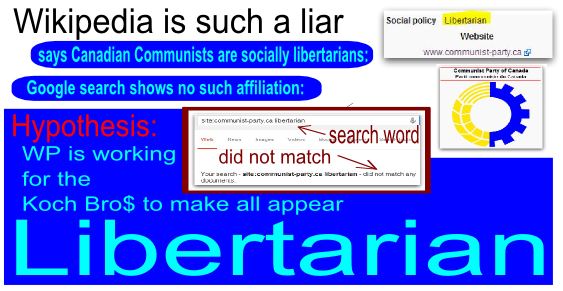
Part of the problem (for me) is that (I don't believe) Linux, even Android is a solution for the simple reason that Defective Dominance was dominating the information society even before free s/w came along (dates back to ancient Egypt). Along w/ the Linux assholes (who will ruin your day) is the whole sick crew over at Wikipedia (high-functioning autism --what Putin has)
What we REALLY need is a MicroKernel ARCHITECTURE that can be build from components so that broken parts can be switched and specrically designed components can be switched in. The obvious path for this is L4 by rolling back a decade to the OSKit to avoid the Dresden crew's proprietary (but pretend to be free) academic-oligarchic "purposing" strategies. Presumably, XP can be run in a cloud-type emulator.
Wednesday, October 30, 2013
Rationale for the Pengpod (in relation to ThinMan Model)
Given NSA involvement in everything with obvious capitulation to gov't sponsored hacking/cracking by nearly every information corporation (possibly even Microsoft/Windows) PengPod makes huge sense
I have promoted L4 over Linux for a decade now, but L4 needs to roll back a decade. to make it actually free and open as FSU developers have made it purely-proprietary (w/o mentioning..) The microkernel advantage, I believe, is currently security-oriented; not to say Linux is bad in that way, but that OSs need to be able to switch out components depending on how political/financial winds blow around their developers. Further, I support the original GNU model where code is highly-visible so that weaknesses can be easily spotted during implementation efforts: scripting like Korn's shell, but significantly updated.
If Pengpod is going to be real-world useful far beyond Android, it needs drivers, and all drivers are written for Apple (IOkit) and Windows (NDSI), so, in my opinion, the driver tail wags the OS dog.
Comparions w/ my Thinman Model from late-90s / early 2000s
If I may say so, I pretty-well "presaged" this idea in the late-90s during the tech boom but had horrible experiences with F-ll-ps and Caldera. (Caldera went on to the famous own-your-brain nonsense law suits bought with SCO via the Unix purchase from Bell, so you get the idea). My products were basically this and also a set-top box that was educationally-oriented. I initially meant to use a National Semiconductor/Cyrix chip that eventually became the VIA MiniITX with all its fun community stuff (http://www.mini-itx.com/projects). At first glance PengPod meets much of my initial criteria including external keyboards and HDMI.
This idea, the ThinMan, meant to develop a purely-data-centric OS that brought modules to data within a browser window, so that each dataset imitated a unique "app." All developers would code would be modules and libraries. Perl's CPAN was the model for support, but in machine- or byte-code; meshing would be the communication method of sharing and to wire for server support: the Thin/Fat model.
Needless to say, I learned the hard way that individual efforts are nearly a waste of time and hugely demoralizing, and that "angel" investors are anything but. Keep in mind the tech market had just crashed along w/ the WTC towers with a good many associates. The entire US economy would follow in a few years thanks to CDS derivatives, which was actually my last paying tech gig, oops.
L4 now runs fully independently as a "security phone"
I must add OSkit when writing about IOkit and drivers. This effort in the earliest part of the century (in Utah, of all places ;) ) was much like it sounds, and was used by Dresden to create the proprietary L4 that is in nearly every phone. In one case, a "secure" phone system "montes" to pure L4 operation, so fully-certified secure code is out there (but not available to us despite impressions.)
L4 is effectively purely-proprietary
The Dresden effort was largely academic (but still proprietary ironically a descendant of the non-owning socialism of the former GDR), so many PDFs (in typically-horrid empirical-style) are available so one can get a good idea of where free OSs need to go--or, at least, follow.
Re-assembled Linux as the new Android
An area w/in Android that confuses me wrt to Linux and Android is the Linux/Android fork. First, why has Android forked, or, perhaps, delineated? The explanation seems to be that Linux & Co. are too slow to intake Android mods, and, of course, Android cannot wait. So, Android goes its own way making it effectively a fork, but it continues to be Linux.
If Android is moving ahead so fast and Linux is lagging, and Android is meeting consumer demand and Linux was a server-oriented deception pretending to be a (free) desktop (for the masses) all along, then, logically, Android is the place to be! What I read is that Android is highly-reduced and, thus, no longer POSIX. So, my question is "why hasn't a distro emerged that takes Android released-code and adds back the missing stuff" to make a valid POSIX desktop (and presumably server) for all systems?
Note: I often coredump here: http://www.oddmuse.org/wiki/John_Bessa
I have promoted L4 over Linux for a decade now, but L4 needs to roll back a decade. to make it actually free and open as FSU developers have made it purely-proprietary (w/o mentioning..) The microkernel advantage, I believe, is currently security-oriented; not to say Linux is bad in that way, but that OSs need to be able to switch out components depending on how political/financial winds blow around their developers. Further, I support the original GNU model where code is highly-visible so that weaknesses can be easily spotted during implementation efforts: scripting like Korn's shell, but significantly updated.
If Pengpod is going to be real-world useful far beyond Android, it needs drivers, and all drivers are written for Apple (IOkit) and Windows (NDSI), so, in my opinion, the driver tail wags the OS dog.
Comparions w/ my Thinman Model from late-90s / early 2000s
If I may say so, I pretty-well "presaged" this idea in the late-90s during the tech boom but had horrible experiences with F-ll-ps and Caldera. (Caldera went on to the famous own-your-brain nonsense law suits bought with SCO via the Unix purchase from Bell, so you get the idea). My products were basically this and also a set-top box that was educationally-oriented. I initially meant to use a National Semiconductor/Cyrix chip that eventually became the VIA MiniITX with all its fun community stuff (http://www.mini-itx.com/projects). At first glance PengPod meets much of my initial criteria including external keyboards and HDMI.
This idea, the ThinMan, meant to develop a purely-data-centric OS that brought modules to data within a browser window, so that each dataset imitated a unique "app." All developers would code would be modules and libraries. Perl's CPAN was the model for support, but in machine- or byte-code; meshing would be the communication method of sharing and to wire for server support: the Thin/Fat model.
Needless to say, I learned the hard way that individual efforts are nearly a waste of time and hugely demoralizing, and that "angel" investors are anything but. Keep in mind the tech market had just crashed along w/ the WTC towers with a good many associates. The entire US economy would follow in a few years thanks to CDS derivatives, which was actually my last paying tech gig, oops.
L4 now runs fully independently as a "security phone"
I must add OSkit when writing about IOkit and drivers. This effort in the earliest part of the century (in Utah, of all places ;) ) was much like it sounds, and was used by Dresden to create the proprietary L4 that is in nearly every phone. In one case, a "secure" phone system "montes" to pure L4 operation, so fully-certified secure code is out there (but not available to us despite impressions.)
L4 is effectively purely-proprietary
The Dresden effort was largely academic (but still proprietary ironically a descendant of the non-owning socialism of the former GDR), so many PDFs (in typically-horrid empirical-style) are available so one can get a good idea of where free OSs need to go--or, at least, follow.
Re-assembled Linux as the new Android
An area w/in Android that confuses me wrt to Linux and Android is the Linux/Android fork. First, why has Android forked, or, perhaps, delineated? The explanation seems to be that Linux & Co. are too slow to intake Android mods, and, of course, Android cannot wait. So, Android goes its own way making it effectively a fork, but it continues to be Linux.
If Android is moving ahead so fast and Linux is lagging, and Android is meeting consumer demand and Linux was a server-oriented deception pretending to be a (free) desktop (for the masses) all along, then, logically, Android is the place to be! What I read is that Android is highly-reduced and, thus, no longer POSIX. So, my question is "why hasn't a distro emerged that takes Android released-code and adds back the missing stuff" to make a valid POSIX desktop (and presumably server) for all systems?
Note: I often coredump here: http://www.oddmuse.org/wiki/John_Bessa
Wednesday, September 25, 2013
FB will delete 10s to 100s of millions of users for "over-friending"
Help end FB's "anti-friending" crisis (though I am at a loss as to how):

Facebook (FB) is deleting, or disabling, accounts to the tune of 100
million accounts, and is, apparently ramping-up, so the numbers banned
from FB will reach into the 100's of millions. FB has about a billion
members, though it can be assumed that many, if not most, members use it
infrequently, perhaps half or more barely long in at all, judging from
my personal observations and experiences on other social sites.
That suggests that FB wants to eliminate a sizable percentage of its actual active "resident population," perhaps 20% to a third; maybe even as much as 50%. A good question is "why would they do that as it makes no sense?" FB profits are high, and its tax burden is apparently negligible (thanks to US government generosity to huge corporations), the per-user maintenance cost is negligible, and if it actually figures out how to attract beneficial sellers and link them wifh valid customers, there is no reason "non-clickers" such as me, will not buy into its commercialism. Seriously, makes no sense from the business standpoint, and is dangerous to the world psychology.
Typical current "friending" experience
I put my workplace as “please friend me as I can’t because I am blocked” and a gallery-owner just “friended” me, probably as a result. When I confirmed, FB asked me if I knew this person, so I responded “yes,” of course. Also, I get continual requests for more personal information, such as “where did I go to school,” or “where did I work.” Frankly, as an early promoter of a social internet (in the late 80s), I think you would have to be very trusting or stupid to use your real name on the Internet, let alone make personal information available everywhere.
General anger with FB and Zuckerman
There are many people angry enough with FB (to organize boycotts) for many, many reasons, whcih makes FB's founder, Zuckerburg, a seriously-hated person. Many express serious ill-will towards Zuckerberg, which may even go to homicidal desires (but not from me).
No "happy ending"
I don't see a happy ending to situation that I think is extremely damaging to the World's psychology for many reasons, including maladatpive behaviors express in FB's film biography, Social Network, as well as the intents of its controlling "angel investors."
Reversing original intent of the social Internet's founders (such as me)
My complaint is that FB is reversing the meaning of the Internet, which is to make create world communication as a form of digital empathy. In retrospect, the concept of "digital empathy" seems like seriously wishful-thinking because it is contradictory (digital personalities are non-empathic) and the capital structures that funded the Interment's "tech boom" of the 1990s have since shown a clear desire to destroy the planet for quick profit. Nonetheless, I have a good many long-term friends (hundreds) from the Internet whom I only know from the Internet and with whom I have excellent relationships, perhaps because of the Internet's digital nature.
The only way to get kicked-off FaceBook is "friending" people whom you don't know in real life
Important to me is the method of "weeding" undesirable members: the method is described "anti-friending" campaign being implemented as part of the "terms of service" agreement that everybody clicks "yes" to but no one comprehends. Because of the way computer-related laws are written, website "terms of service" are actually law, though you have to break actual law to get prosecuted, as Aaron Schwartz was. Still, no matter what, FB's terms of service are the final word, and, contact with actual, potentially feeling humans at FB is nearly impossible. The intractable nature of FB is described in psychological personality order of "concrete thinking," which is a serious problem. After watching the movie about him, Social Network, I think I am within my rights by wondering if he was/is using.
Rationale
The "rationale" for new-friend-blocking that FB gives to me is that I am somehow abusing people who don't know me by asking to be their friends. In real life, normal people talk to strangers and potentially spark up a friendship. Normal people who are rebuffed by others who think that they are being abused by an extension of friendship invariably think to themselves something like "what an asshole!"
Patronizing "assholes"
It would appear that FB is specifically patronizing this kind of unusually hostile and perhaps paranoid person. (This is not to say such hostility makes a person "bad" as many people are simply extending negative worldviews of others--are are necessarily bad--and can recover through therapy.) Nonetheless, given FB's size of a billion users, FB's promotion of this maladaptive approach to life significantly adds to the "contagion effect"
Does, or did, Zuckerberg use cocaine?
Further cause for concern is that I sense from photographs of Zuckerberg at work and play is that he is some kind of user, and the movie about him, Social Network, emphatically stresses cocaine use during its "start up" --cocaine is highly addiction. My concern here is not Zuckerberg's well-being, but the personality-disorder effects of cocaine, it causes concrete thinking (which halts possible change) and narcissism, which can only compound the situation. But then, if he is the way he is portrayed in the movie, which seems accurate, doe he really run FB, or is it run by the "angel investors" that hold controlling stock (and attempted to rob its other founders).
A Dialectical explanation of my concern
A different dialectical issue to personally affect me is constant threat to block my account for using it to do what the Internet, and before it, the Information Society, was meant to do: make friends with the World. This is, of course, is the ultimate extension of Empathy, as everyone knows, but it is just about the only way to get kicked-off FaceBook--why? There is no doubt in my mind that a major reason is FaceBook’s “business model,” that focuses on family and community (as consumers), but I “sense” there is something more. I think of it in terms of “divide and conquer,” rational reduction to the family/work level where incompetent matriarchs/patriarchs prevent any talent from evolving to higher level incompetence to threaten the incompetents of the “power elite” (Bush/Obama). This inquiry into FaceBook (followed, I hope, by empathic action) is (in my opinion) the best critical direction for information society studies because it seems obvious to most what is going on with it: information control society. The scope and depth of the problem affects all information (like bacterium) making comprehension of it difficult for most which is why we need abstraction skills, abstraction being antithetical to the thesis/anti-thesis/synthesis of the current dialectic, but the way serious information science is accomplished, such as with the Internet Protocol communication stack (and the Empathy Model).
Dehumanization by FB and other dangerous "tech effects"This looks like an ongoing-process, and is important for the dual reasons that FB has such a big audience that it will continue the process of metacognitive de-humanization through human isolation, and that the purely “unfeeling types” will continue their seamless bond with computer networks to bring implement metacognitive control, such as BF Skinner modeled it in Walden II. Sad truth is that all community websites have similar controlling business models as the “angel investors” dictated the commercial nature of the Internet early on (in the mid-90s), and even open source and non-commercial sites such as Wikipedia and supporting components such as Wikipedia and Ubuntu openly support intellectual property protection either by narrowly defining or controlling free information so as to make “their own.” Ubuntu, for instance, will force users to unload file sharing tools such as Handbrake during upgrades, and Wikipedia forces all material to confirm to its particular “free” approach so as to actually confound society’s generous laws allowing “fair use.”
How does one fight this?
Seriously, how do you fight this? Government supports “business freedom” giving “terms of service” as a weapon for rabid prosecutors (Aaron Schwartz), the average person seeks to “stay off the radar” for safety’s sake, and the Internet “media” is purely positivist, that is to say that it metacognitively paints a pretty picture of everything often by suggesting (Socratic) alternatives--so as not to impact the “buying mania” of its advertised products (by family). When it offers alternatives to FB, they go in the direction of private interconnections between people who can just as easily talk on the phone (or text) or, preferably, meet in person.
Not good, it makes "cyber thuggery” (hacking) the only available option to “save the world,” which actually serves the oligarchic “meme’s” (or selfish-gene’s) maladaptive purpose by thwarting democracy’s evolution of freedom of speech through the information society. Democracy is what the Internet is meant to enhance, and why it has a free and open nature --not to create a information control society.
Reintroducing (wiki-style) anonymity
In the end, internet anonymity (as practiced by the Wikipedia) is not to protect one form the individual predator (as originally conceived) but from the information collector:
FaceBook defines, more than the others--even the NSA, the Information Society predator
- Facebook has and will delete a sizable percentages of its user-base:
- at least 10's of millions, perhaps 100's of millions from a user-base of a billion
- I may be in the "next round" of "deletions"

That suggests that FB wants to eliminate a sizable percentage of its actual active "resident population," perhaps 20% to a third; maybe even as much as 50%. A good question is "why would they do that as it makes no sense?" FB profits are high, and its tax burden is apparently negligible (thanks to US government generosity to huge corporations), the per-user maintenance cost is negligible, and if it actually figures out how to attract beneficial sellers and link them wifh valid customers, there is no reason "non-clickers" such as me, will not buy into its commercialism. Seriously, makes no sense from the business standpoint, and is dangerous to the world psychology.
Typical current "friending" experience
I put my workplace as “please friend me as I can’t because I am blocked” and a gallery-owner just “friended” me, probably as a result. When I confirmed, FB asked me if I knew this person, so I responded “yes,” of course. Also, I get continual requests for more personal information, such as “where did I go to school,” or “where did I work.” Frankly, as an early promoter of a social internet (in the late 80s), I think you would have to be very trusting or stupid to use your real name on the Internet, let alone make personal information available everywhere.
General anger with FB and Zuckerman
There are many people angry enough with FB (to organize boycotts) for many, many reasons, whcih makes FB's founder, Zuckerburg, a seriously-hated person. Many express serious ill-will towards Zuckerberg, which may even go to homicidal desires (but not from me).
No "happy ending"
I don't see a happy ending to situation that I think is extremely damaging to the World's psychology for many reasons, including maladatpive behaviors express in FB's film biography, Social Network, as well as the intents of its controlling "angel investors."
Reversing original intent of the social Internet's founders (such as me)
My complaint is that FB is reversing the meaning of the Internet, which is to make create world communication as a form of digital empathy. In retrospect, the concept of "digital empathy" seems like seriously wishful-thinking because it is contradictory (digital personalities are non-empathic) and the capital structures that funded the Interment's "tech boom" of the 1990s have since shown a clear desire to destroy the planet for quick profit. Nonetheless, I have a good many long-term friends (hundreds) from the Internet whom I only know from the Internet and with whom I have excellent relationships, perhaps because of the Internet's digital nature.
The only way to get kicked-off FaceBook is "friending" people whom you don't know in real life
Important to me is the method of "weeding" undesirable members: the method is described "anti-friending" campaign being implemented as part of the "terms of service" agreement that everybody clicks "yes" to but no one comprehends. Because of the way computer-related laws are written, website "terms of service" are actually law, though you have to break actual law to get prosecuted, as Aaron Schwartz was. Still, no matter what, FB's terms of service are the final word, and, contact with actual, potentially feeling humans at FB is nearly impossible. The intractable nature of FB is described in psychological personality order of "concrete thinking," which is a serious problem. After watching the movie about him, Social Network, I think I am within my rights by wondering if he was/is using.
Rationale
The "rationale" for new-friend-blocking that FB gives to me is that I am somehow abusing people who don't know me by asking to be their friends. In real life, normal people talk to strangers and potentially spark up a friendship. Normal people who are rebuffed by others who think that they are being abused by an extension of friendship invariably think to themselves something like "what an asshole!"
Patronizing "assholes"
It would appear that FB is specifically patronizing this kind of unusually hostile and perhaps paranoid person. (This is not to say such hostility makes a person "bad" as many people are simply extending negative worldviews of others--are are necessarily bad--and can recover through therapy.) Nonetheless, given FB's size of a billion users, FB's promotion of this maladaptive approach to life significantly adds to the "contagion effect"
Does, or did, Zuckerberg use cocaine?
Further cause for concern is that I sense from photographs of Zuckerberg at work and play is that he is some kind of user, and the movie about him, Social Network, emphatically stresses cocaine use during its "start up" --cocaine is highly addiction. My concern here is not Zuckerberg's well-being, but the personality-disorder effects of cocaine, it causes concrete thinking (which halts possible change) and narcissism, which can only compound the situation. But then, if he is the way he is portrayed in the movie, which seems accurate, doe he really run FB, or is it run by the "angel investors" that hold controlling stock (and attempted to rob its other founders).
A Dialectical explanation of my concern
A different dialectical issue to personally affect me is constant threat to block my account for using it to do what the Internet, and before it, the Information Society, was meant to do: make friends with the World. This is, of course, is the ultimate extension of Empathy, as everyone knows, but it is just about the only way to get kicked-off FaceBook--why? There is no doubt in my mind that a major reason is FaceBook’s “business model,” that focuses on family and community (as consumers), but I “sense” there is something more. I think of it in terms of “divide and conquer,” rational reduction to the family/work level where incompetent matriarchs/patriarchs prevent any talent from evolving to higher level incompetence to threaten the incompetents of the “power elite” (Bush/Obama). This inquiry into FaceBook (followed, I hope, by empathic action) is (in my opinion) the best critical direction for information society studies because it seems obvious to most what is going on with it: information control society. The scope and depth of the problem affects all information (like bacterium) making comprehension of it difficult for most which is why we need abstraction skills, abstraction being antithetical to the thesis/anti-thesis/synthesis of the current dialectic, but the way serious information science is accomplished, such as with the Internet Protocol communication stack (and the Empathy Model).
Dehumanization by FB and other dangerous "tech effects"This looks like an ongoing-process, and is important for the dual reasons that FB has such a big audience that it will continue the process of metacognitive de-humanization through human isolation, and that the purely “unfeeling types” will continue their seamless bond with computer networks to bring implement metacognitive control, such as BF Skinner modeled it in Walden II. Sad truth is that all community websites have similar controlling business models as the “angel investors” dictated the commercial nature of the Internet early on (in the mid-90s), and even open source and non-commercial sites such as Wikipedia and supporting components such as Wikipedia and Ubuntu openly support intellectual property protection either by narrowly defining or controlling free information so as to make “their own.” Ubuntu, for instance, will force users to unload file sharing tools such as Handbrake during upgrades, and Wikipedia forces all material to confirm to its particular “free” approach so as to actually confound society’s generous laws allowing “fair use.”
How does one fight this?
Seriously, how do you fight this? Government supports “business freedom” giving “terms of service” as a weapon for rabid prosecutors (Aaron Schwartz), the average person seeks to “stay off the radar” for safety’s sake, and the Internet “media” is purely positivist, that is to say that it metacognitively paints a pretty picture of everything often by suggesting (Socratic) alternatives--so as not to impact the “buying mania” of its advertised products (by family). When it offers alternatives to FB, they go in the direction of private interconnections between people who can just as easily talk on the phone (or text) or, preferably, meet in person.
Not good, it makes "cyber thuggery” (hacking) the only available option to “save the world,” which actually serves the oligarchic “meme’s” (or selfish-gene’s) maladaptive purpose by thwarting democracy’s evolution of freedom of speech through the information society. Democracy is what the Internet is meant to enhance, and why it has a free and open nature --not to create a information control society.
Reintroducing (wiki-style) anonymity
In the end, internet anonymity (as practiced by the Wikipedia) is not to protect one form the individual predator (as originally conceived) but from the information collector:
FaceBook defines, more than the others--even the NSA, the Information Society predator
Sunday, February 24, 2013

Simplified Model
Wallet-sized abstraction to access people and situations psychologically on the fly
My empathy model is a clean-room abstraction that specifically looks mutually-beneficial interrelations for organismic success, and is easily accepted by the vast majority of people, that is to say, those who normally interrelate. It is fundamentally based on Dariwn's second important writing that attributes human morailty to the evolution of the "natural affection" of higher animals. It is designed almost as a manual to apply empathy ideas to situations where normal interrelation is problematic or impossible--perhaps to design an avoidance strategy, or, possibly, to fight back as in activism. It strongly suggests that the root problems attacking otherwise normal, happy society are rooted in "anti-complex" organic dysfunction.
With the start of my psych masters, the established empirical model that leverages the ancient Socratic method, the dialectic, introduced to me an entirely new language to describe mental problems that is not accessible to, or easily-used by, the average, normal people. Further, the use of common psychological words from the dictionary such as psychotic and schizophrenic may be considered "unethical" to use with "proper training" (ie, a PhD and a license).
However, there are big changes happening in the study of the mind with the introduction of digital imaging. This change is very popular; more accurate fMRI-evidenced material is being produced now than empirically-evidenced material using the thesis, antithesis, synthesis of empirical science.
Now, mental brain activity as it surfaces as human activity can be seen accurately in images. Maladaptive activity can be directly related to parts of the brain that are failing. That is to say activity (or behavior) that results from an inability to adapt to an internal problem, such as those that are organically-caused by DNA failures, or traumatic resulting from unfortunate events often deliberately caused by others, can be viewed, or seen to be absent, in images on a screen. An important example is in this article about signalling errors (in this blog) caused by DNA problems where the protein that is supposed to instruct neural function is broken and thus cannot do its job. In this study, patients with the broken signalling process suffer from schizophrenia, psychosis, and bipolar disorder.
This study points us in the right direction. It encourages us to create hypotheses that can suggest that specific major mental illnesses can be caused by specific signalling errors, and that maladaptive activity can be predicted by testing for these errors.
Initially a problem surfaced with an early attempt. If you attempt to tease apart illnesses based signalling errors, this does not help as it accounts for three separate diseases. Psychologists who have been consulted are adamant that schizophrenia and psychosis are completely different illnesses especially in the empathy context--schizophrenics are easy to get along with. When looked at closely, psychosis seems to result in problems in networks (including psychotic depression) that causes "out of control" behavior, and schizophrenia comes from false information signalling in the analytic, executive function, working memory part of the mind, the pre-frontal cortex. It should be noted that the protein signalling errors were correlated with diagnoses made using the DSM, which predates fMRI evidence; the DSM may be (or probably is) dragging fMRI research backwards. Further, one of the very first discoveries while building the empathy model, is that most of those interviewed in the empathy working group who had had problems, had had on average no less that five separate diagnoses; diagnostics are problematic--probably because the DSM is so horribly convoluted.
One component of the cited signalling study could easily be correlated with observed reality. Family members carrying the same hereditary-and-genetic defect had similar fMRI scans as positively-diagnosed participants, but abnormalities were to lesser-degrees. One of my early observed subjects was done in a family setting with me absorbing far more data than I cared for. Family members were higher-functioning but less moral; as described in the empathy model, they applied their dysfunctions as controlling strategies for secondary gain: greed. This goes to the obsessive-compulsive-impulsive continuum that historically links to addictive behaviors that disregard effects on others--money and possessions being two of them along with substances. This puts uncontrolled impulse in the psychotic category.
One component of the cited signalling study could easily be correlated with observed reality. Family members carrying the same hereditary-and-genetic defect had similar fMRI scans as positively-diagnosed participants, but abnormalities were to lesser-degrees. One of my early observed subjects was done in a family setting with me absorbing far more data than I cared for. Family members were higher-functioning but less moral; as described in the empathy model, they applied their dysfunctions as controlling strategies for secondary gain: greed. This goes to the obsessive-compulsive-impulsive continuum that historically links to addictive behaviors that disregard effects on others--money and possessions being two of them along with substances. This puts uncontrolled impulse in the psychotic category.
Modeling
So, to create a workable model that is in line with the empathy model, psychosis (being "out of control") and schizophrenia (hallucinations) are pulled apart and the third important "empathy model" problem, aspergers, is added as it is generally linked with the inability to feel others' emotions, and thus act with respect to them--morally. Since the empathy model is made for the common person (that is to say it is democratic), and since there may be peril in using these terms (because of ethical perversions), the definitions, or descriptions, for the diseases are used rather than the disease names themselves. This is a wallet card that should provide one with a map to avoid the maladaptive behaviors of those whose maladaptions to sickness make them immoral, and thus dangerous. If it is a successful model, it should save the average person a great deal of grief. The purpose of a model is almost the direct opposite of the purpose of an empirical study; a model (such as a business model, or the highly-successful weather models) is to predict phenomena and provide benefits. This model has been doing both for a year, and is thus tested--just not correlated to genetic-fMRI-assessment sicence (yet).
Metacognition
The final item, that is not directly related to signalling errors, is the idea of metacognition that appears in the empathy model as "painting a pretty picture" of poor events to make them more palatable. This is often the basis of cognitive therapy which suggests looking finding an "alternative" way to look at things to relieve troubling symptomatic such as anxiety or depression. The problem is, of course, that the underlying problem is ignored and that only symptoms are addressed. A person could spend their entire life feeling better about a person with dangerous signalling errors, say, to save a marriage, without realizing that their life has been stolen.
In this model's view, the adaption of humanity to signalling errors as they manifest as psychosis, aspergers, and the combination of the two, socio-psychopathy, is at the crux of humanity's failure; it is an alternative to what is natural in that it empowers dangerous people in the traditional sense, it gives them control. In the empathy model sense, the maladaptive are given power to take resources from others through coercion. This is necessary for the emphatically maladaptive because they cannot use empathic abilities and facilities to work with others to create resources.
In this view, psychology (historically with the dialectic and currently with the DSM) have provided an alternative to what is natural using what is called the Socratic method. We normal humans are expected to view maladaption from an alternative perspective, that is to paint a pretty picture in place of reality to make life less anxious and depressing. This, in this view, is the "method" of civilization, the dialectic, and deception.
Normal human success depends on shining a light on it, which is the purpose of this "simplified model wallet card."
Mediated Citations:
this section is an implementation of annotated bibliography that (eventually) hopes to blend referential support, footnotes, and (most important) forum discussion with the idea that it is our differing influences that define our points of view, and that by combining these influences we should come to agreed-upon explanations for phenomena
Protein signalling from McIntosh, 2009
A look back on this research shows how abstracted this simplified model is, and the size of the gap between pure science and everyday reality. Initially I intended to directly apply the research which links many diseases to a single signalling error, but resistance from experts in the field forced me to reduce this one error to a single disorder, psychosis, because (as they say) psychosis is functionally related to bipolar, but not to schizophrenia. In defense of the pure scientists, the signalling goes to "maintenance" cells such as the astrocyte in the background. (I think of these cells as relatives of neurons).
A though that occurred to me as I first read the studies, is that I had once hypothesized that the fat on the cells, mylein, gets burned off when the mind is over active, such as in the term "burned out." This occurred to me in the mid-90s when I was fixing an expensive desktop computer and noticed that the CPU chip got much hotter when it was running a "batch job" than when it was still. Given the many abstracted similarities between computers and humans, I also assumed human intellectual matter will get hotter in similar proportions, and hence "burn off" the insulation causing dysfunction--in any part of the brain. This implicates both dopamine-exciting meth, and extreme overactivity caused by, say, terror-level fear resulting in trauma, sometimes called an insult.
APA-style citations:
Chong, V., Thompson, M., Beltaifa, S., Webster, M., Law A., and Weickertad, S. (2007). Elevated Neuregulin-1 and ErbB4 protein in the prefrontal cortex of schizophrenic patients: Schizophr Res. 2008 March ; 100(1-3): 270–280. doi:10.1016/j.schres.2007.12.474.
Fazzari, P., Paternain, A., Valiente, M., Pla, R., Luján, R., Lloyd, K., et al. (2010). Control of cortical GABA circuitry development by Nrg1 and ErbB4 signalling. Nature, 464(7293), 1376-1380. doi:10.1038/nature08928.
Homayoun, H., & Moghaddam, B. (2008). Orbitofrontal cortex neurons as a common target for classic and glutamatergic antipsychotic drugs. Proceedings of the National Academy of Sciences of the United States of America, 105(46), 18041-18046. doi:10.1073/pnas0806669105.
Li, B., Woo, R., Mei L., Malinow, R., (2007, May 24). The neuregulin-1 receptor ErbB4 controls glutamatergic synapse maturation and plasticity. Neuron, 54(4), 583-597.
McIntosh, A., Hall, J., Lymer, G., Sussmann, J., and Lawrie, S. (2009). Genetic risk for white matter abnormalities in bipolar disorder. International Review of Psychiatry, 21(4), 387-393. doi:10.1080/09540260902962180.
McIntosh, A., Hall, J., Lymer, G., Sussmann, J., and Lawrie, S. (2009). Genetic loading for psychosis and the internal capsule disorder. International Review of Psychiatry, 21(4), 387-393.
Stone, J., Morrison, P., and Pilowski, L. (2007, January 26). Review: Glutamate and dopamine dysregulation in schizophrenia — a synthesis and selective review. Journal of Psychopharmacology. 21(4), 440-452
Mediated Citations:
this section is an implementation of annotated bibliography that (eventually) hopes to blend referential support, footnotes, and (most important) forum discussion with the idea that it is our differing influences that define our points of view, and that by combining these influences we should come to agreed-upon explanations for phenomena
Protein signalling from McIntosh, 2009
A look back on this research shows how abstracted this simplified model is, and the size of the gap between pure science and everyday reality. Initially I intended to directly apply the research which links many diseases to a single signalling error, but resistance from experts in the field forced me to reduce this one error to a single disorder, psychosis, because (as they say) psychosis is functionally related to bipolar, but not to schizophrenia. In defense of the pure scientists, the signalling goes to "maintenance" cells such as the astrocyte in the background. (I think of these cells as relatives of neurons).
A though that occurred to me as I first read the studies, is that I had once hypothesized that the fat on the cells, mylein, gets burned off when the mind is over active, such as in the term "burned out." This occurred to me in the mid-90s when I was fixing an expensive desktop computer and noticed that the CPU chip got much hotter when it was running a "batch job" than when it was still. Given the many abstracted similarities between computers and humans, I also assumed human intellectual matter will get hotter in similar proportions, and hence "burn off" the insulation causing dysfunction--in any part of the brain. This implicates both dopamine-exciting meth, and extreme overactivity caused by, say, terror-level fear resulting in trauma, sometimes called an insult.
APA-style citations:
Chong, V., Thompson, M., Beltaifa, S., Webster, M., Law A., and Weickertad, S. (2007). Elevated Neuregulin-1 and ErbB4 protein in the prefrontal cortex of schizophrenic patients: Schizophr Res. 2008 March ; 100(1-3): 270–280. doi:10.1016/j.schres.2007.12.474.
Fazzari, P., Paternain, A., Valiente, M., Pla, R., Luján, R., Lloyd, K., et al. (2010). Control of cortical GABA circuitry development by Nrg1 and ErbB4 signalling. Nature, 464(7293), 1376-1380. doi:10.1038/nature08928.
Homayoun, H., & Moghaddam, B. (2008). Orbitofrontal cortex neurons as a common target for classic and glutamatergic antipsychotic drugs. Proceedings of the National Academy of Sciences of the United States of America, 105(46), 18041-18046. doi:10.1073/pnas0806669105.
Li, B., Woo, R., Mei L., Malinow, R., (2007, May 24). The neuregulin-1 receptor ErbB4 controls glutamatergic synapse maturation and plasticity. Neuron, 54(4), 583-597.
McIntosh, A., Hall, J., Lymer, G., Sussmann, J., and Lawrie, S. (2009). Genetic risk for white matter abnormalities in bipolar disorder. International Review of Psychiatry, 21(4), 387-393. doi:10.1080/09540260902962180.
McIntosh, A., Hall, J., Lymer, G., Sussmann, J., and Lawrie, S. (2009). Genetic loading for psychosis and the internal capsule disorder. International Review of Psychiatry, 21(4), 387-393.
Stone, J., Morrison, P., and Pilowski, L. (2007, January 26). Review: Glutamate and dopamine dysregulation in schizophrenia — a synthesis and selective review. Journal of Psychopharmacology. 21(4), 440-452
Saturday, January 26, 2013
Saving your contacts from the Verizon / LG Cosmos phone to a micro sd card
Most of us are upgrading (this was a particularly awkward phone). Mass storage showed everything except phone numbers, and Verizon attempted to harvest this by pulling me into their "cloud" --something I would avoid at all costs.
Unfortunately, the phone hacking tool bitpim does not cover this phone, even after getting the drivers loaded from LG. Drivers don't allow mass storage, and the default mass storage from the phone does not allow access to contacts, as I mentioned.
Finding no other options from the Web, I just started pushing buttons at near-random, and found success!
This is what I ultimately did:
I put in a
- micro sd card (be careful, buggers are easy to misplace), pressed the
- center button, went to
- settings and tools then
- memory (option 0, where 10 should be) then
- phone memory, picked
- mycontacts, then
- move to the left and
- mark all to the right and
- done to the left
- and the numbers loaded to the micro sd card as vcards, the rest was simple.
I might mention that there are buttons that can erase the memory as options, so be careful. I ran this procedure on two phones and checked it again as I wrote, so I feel confident it is correct.
Saturday, December 15, 2012

Defective dominance, a phrase I use often (but never wrote about) to describe the ugliness we see in "our" human society is "defective dominance." This is to say that, because it is easy to profit using cruelty, and difficult to prevent cruelty through kindness (or profit from generosity), cruelty, and especially cruelty-causing genes, win out in "our" synthetic world.
In the political context, psych-types would describe this defective dominance in terms of personality disorders, the most dangerous of which is malignant narcissism, what Adolf Hitler had. I assume Dawkins would agree; I believe he speaks from experience, as he, as academic oligarch, probably self-describes in his best-selling books about "selfish genes."
Surprisingly to me, I found "defective dominance" to be important evolutionary and genetic term, though not necessarily widespread. (I was expecting to find more paranoid conspiracy-type stuff.)
Like most genuine genetic-evolutionary material, references to defective dominance are exceedingly difficult to fathom, but very easy to observe in everyday life. By adding up all the "ugliness" that we see, and then adding to it all the "ugliness" elsewhere that we don't see (which requires multiplication), and then "factoring in growth" which means raising it to an exponential (such as "squaring" it), any of us can comprehend that we, as a Human race and a planet Earth, are in deep trouble. The result will be mega-genocidal disaster in coming decades.
The question is "how will we reverse the control of the defective dominant?"
The humanitarian approach is to attempt to create awareness of the problem, but I believe that effort will be ineffectual; I use the Vietnam war as an example: it was the military action by Vietnam that ended the war, not the active opposition to the war by the US population.
Blocking possibilities of a popular "information-based" solutions is the academic use empiricist science--which is very much what it sounds like. Empiricism has, for 23-2500 years, focused on developing empire-building technologies for the economic growth of the aristocracy (with a short communist experiment): roads, weapons, ships, towers, medicine. Academia, for its educational effort, has been rewarded with its own "ivory" tower in it has metacognitive control over nearly every one of us for big parts of our lives as students.
Economics as a symptom of defective dominance
Most importantly, economics is not constructive nor a whole systems model. It is a connected sequence of causal conclusions designed to resemble a model.
This should be a major concern to every one of us, because it is an alternative to the system that we evolved in (or God granted us); it is a synthesis -- a fiction. The terminology and math used are complicated lies designed to show that as a market-based synthetic system it benefits all through growth. In reality, it declines financially because of inflation, erodes the meanings of our lives, and will ultimately consume all the planet's resources --as a result of uncontrolled growth.
Specific fictions within the terminology and math of economics could be, for instance, the use of retail consumption as a positive asset (or growth) when in actual business, it is a debit (or decline). House building, as a product is an asset, but in its present context it is consumption, not production, as retail is.
Production has, of course, been largely shipped to other countries, and market values --the actual measurement of a market-based economy-- are out-paced by inflation.
Economists see growth in empiricist math, but the wealthy can only grow by absorbing the resources of others and undercutting their salaries. Even the wealth of the wealthy is eroded by inflation necessitating increasing "greed" to maintain lifestyles.
Most importantly, economics is not constructive nor a whole systems model. It is a connected sequence of causal conclusions designed to resemble a model.
This should be a major concern to every one of us, because it is an alternative to the system that we evolved in (or God granted us); it is a synthesis -- a fiction. The terminology and math used are complicated lies designed to show that as a market-based synthetic system it benefits all through growth. In reality, it declines financially because of inflation, erodes the meanings of our lives, and will ultimately consume all the planet's resources --as a result of uncontrolled growth.
Specific fictions within the terminology and math of economics could be, for instance, the use of retail consumption as a positive asset (or growth) when in actual business, it is a debit (or decline). House building, as a product is an asset, but in its present context it is consumption, not production, as retail is.
Production has, of course, been largely shipped to other countries, and market values --the actual measurement of a market-based economy-- are out-paced by inflation.
Economists see growth in empiricist math, but the wealthy can only grow by absorbing the resources of others and undercutting their salaries. Even the wealth of the wealthy is eroded by inflation necessitating increasing "greed" to maintain lifestyles.
Technical Reference
Crutchfield, J. P. and Schuster, P. (2003). Evolutionary dynamics: Exploring the interplay of selection, accident, neutrality, and function. New York, NY: Oxford University Press.
Sunday, September 23, 2012
Metacognition and the current dialectic: A "FaceBook" interview
Introduction
The following is a conversation that takes a question and answer approach with a woman who "liked" occupy critical inquiry on FaceBook, and who happens to have a high-ranking executive position in a very large (and often hated) consumer goods corporation.
John Bessa:
Thanks for "liking" occupy critical inquiry -- based on what I learned (and learned for my psych masters) I have extended the dialectic to metacognition, which is basically the same but different in subtle ways. Dialectic is 2-3 K yrs old, and metacognition is future "thought control" (seriously).
KBG:
Hi John thanks for the invite to merge our worlds. 1 thing you should know about me is I'm a very simple thinker. By this I don't mean that I'm shallow but because I am aware of how the power of persuasion can alter my ability to perceive, I constantly challenge myself (and others) to understand our assumptions.
Metacognition and the current dialectic
It is a pretty simple concept: the dialectic is the "method" of civilization which is the "process" of controlling society for the benefit of the wealthy (Socrates and Plato 500 BC), and ultimately communism (control w/o the wealthy, 1850-1990). Fortunately communism failed, but it will be back in another format, and that method will be metacognition, and the name will be the (soon-to-be-late Aaron Beck).
KBG:
Are you familiar with this guy: Edgar Schein?
http://en.m.wikipedia.org/wiki/Edgar_Schein#section_1.
He scares the shit out of me.
John Bessa:
I think he did pop on the radar once for school in terms of group organization -- question is, is he dialectic? if so, in the trash. Is he anti-dialectic, if so he is an ally. I suspect that as an academic he follows the synthetic path and not the understanding of nature (the physic)
KBG:
Can you explain that - synthetic versus nature? Ive never heard the term synthetic path so I want to make sure I understand it.
John Bessa:
Path away from nature towards chemical substitutes, gives you cancer, destroys the whales. In economics, inflation outpaces growth making growth actually economic decline. The basis is the Hegelian dialectic:
- a thesis (a good idea, or abstraction)
- antithesis (good idea is attacked)
- synthesis (outcome that reverses good idea)
So synthesis is really not a path but a method or process that is like a chemical process.
KBG:
Designed to destroy and destruct the natural?
John Bessa:
Synthesis processes nature for resources w/o concern for consequences -- including people, and I am specifically thinking about aboriginals who live in nature, or in balance with it. Synthesis reveals itself as native extermination, the extermination process belongs to people with a specific genetic signalling errors, like Hitler and Stalin (Hegelian followers).
KBG:
Yes, this describes Schein who believes management should use coercive persuasion to keep workers aligned with the goals of the Org. Schein was given free reign in the 70's to do psych experiments on prisoners.
John Bessa:
This makes Schein dialectic (cognitive) and didactic (behavioral); he probably got them to do what he wanted in exchange for cigarettes, then they went back to whatever they were doing before the study. I call that the negative behavioral feedback loop as, in this case, the prisoners create a metacognition to make the dialectic-didactic researcher think he/she is in control. The researcher then creates a metacognition from the feed back loop to help with the synthesis that is the civilization process.
KBG:
Yup.
John Bessa:
So I assume you don't like that guy.
KBG:
No. Not in the least.
John Bessa:
That is good. I have been working exclusively with empathy (as emotional communication) until occupy came along -- in a few months I had a name for the flip side to empathy, the dialectic, and saw it in revolution, which explains why we get nowhere each time.
My cognitive behavioral therapy class (masters in psych) keyed me into metacognition as the new dialectic (I learned about the dialectic from the Occupy movement), and I have been finding subtle but important differences between metacognition and the dialectic. I believe metacognition will be the future battleground, but typically dialectics (now cognitivists) keep things hidden from the people, which is typical of academia. Academia tends to change meanings of words (often to opposites) to complicate issues, and is also able to charge amazing tuition for the material that they hold in monopolistic ways.
KBG:
At 1st I loved Schein because he is the only to understand that a separate culture exists for the Operations level in Manufacturing {my employment}, then I realized his goal is to exterminate my free will.
John Bessa:
Metacognition is already "naturally" in place as maladaptions to life's stresses, such as the use of "sliver linings" to make one feel better or rationalize past mistakes -- little white lies we tell ourselves, really minor cases. Television, and similar media, is the major case -- total synthesis, pure didactic and dialectic, and increasingly purely metacognitive. It seems your work environment is precisely Plato's republic:
- executive class,
- enforcement class, and
- workers
In Plato's republic, only workers have fully functioning ~natural~ minds, which explains mind control. The two top parts of his (and our) pyramid is un-empathic and hence sadistic (psychotic, asperger-ed, and often schizophrenic).
The bottom portion, or workers, typically suffer from trauma, though many are dialectic themselves and attack meaningful change as "abstract" (from Hegel and Trotsky).
I am hypothesizing that Plato's Republic might have come to Greece from the Pharaoh's influence on the Israelites when they were Egyptian slaves; the concept then spread through the Middle East to Athens. Natural growth, as an extension of guiding evolution, tends to be democratic. Aboriginal democracy is always find it circles, such as that tribal council circles that are ubiquitous for North American natives.
I am hypothesizing that three DNA signalling errors are governing synthesis (as it is counter-evolutionary):
are probably the three DNA signalling errors:
- aspergers
- psychosis
- schizophrenia
The first two lead to trauma in others -- combine them and you have a sociopath. Schizophrenia is harmless by itself, but creates intense problems when combined with the other two (eg. Caligula).
The forth category of illness results from aspergers and psychosis, which together create sociopathy or psychopathy (depending on the context). I think that in PTSD, the neurons that act as sensory inhibitors, especially for fear, get fried from too much cycling. Drugs such as cocaine and meth have the same effect as fat (white matter that is an electrical insulator) melts off the neurons from too much heat making them slower and thus less effective for the brain's important (and ancient) modelling processes.
KBG:
I am curious to know more: specifically how to recognize and resist.
John Bessa:
Resist what?
KBG:
Mind fuck, believing the dialect.
John Bessa:
It is a metacognition, which is in the front part of the brain, reality, or consciousness is in the deep part of the brain -- the two are connected by pathways that include empathic neurons.
Ask yourself (as Carl Rogers might): "what does your true natural self believe?" Get away for a few days and the cognitive "voices" (TV, work, family, sales people, bosses, dialectic sub-workers) will quiet down and your natural voice will emerge from within, as a sort of personal mythical self (from CG Jung).
However, when "resisting," keep in mind that the "revolution" is dialectic and that the low-end dialectics strictly attack the abstract (which is thesis or any new ideas) to create the antithesis (attacks against good ideas to create stupid ideas) to prevent evolution (with synthesis). The process is pretty simple if you think about it and very common. It is everywhere -- metacognition is more general than the dialectic (especially Hegelian) and can sometimes be quite different as it involves large chunks of information that have been injected as small pieces on a minute-by-minute basis by media, teachers, bosses, etc.
The fear that all this information causes by replacing naturally derived experiential information (from Carl Rogers) is able to repress the conscientiousness (ancient and inner part of the mind) to convert it into an unconscious that is as disturbed as the dialectics' are making us brain dead, and much like them.
The current strategy involves attacking the abstract as the Hegelian dialect (1800s) that was reinforced by Marx and Engels (to fight Utopian socialist worker ideals) and made "real" by Trotsky in the 20th century as Soviet communism.
This is was a big turning point for me because I always believed that Trotsky is held as the "good" and "true" communist, who was victimized by the traitor Stalin -- but not so. He and Stalin were on the same page, there combat is consistent with dialectical behavior, as dialecticians tend to be egotistic. If the dialectic is threatened, however, then dalecticians tend to bond to fight the threat, while conspiring against each other. This behavior is also typical of capitalists (such as we read about in the New York Times business section) and provides evidence (along with Plato's republic) that capital is dialectic, because it is not specifically described as such by Adam Smith, for instance. (Smith, however, influenced Hegel's economic views.)
Understanding Trotsky was the big leap for me, as suddenly, all that I had been told about the Left and revolution during my time on the streets (of the Lower East Side [LES] of Manhattan during the homeless crisis of the 80s) was lie, not just some of it: an ancient and well-organized metacognitive plan that even included Emma Goldman, the founding LES anarchist.
The plan dates back to 2500 BC and, as dialectically designed, is able to keep adapting to attempts to put humanity back on an evolutionary path. The final adaption is apparently and independent metacognition strategy that will combine the mass-teaching strengths of the didactic (which can be subverted by the negative behavioral loops that the prisoners probably used to confound Shein's research). So the upcoming metacognitive thought control strategies will be different, and I hope to popularize these differences before they get into full swing which should be in upcoming decades: 2040-50. Science fiction seems to accurately describe metacognitive societies, such as Orwell's 1984, yet we, as society, fail to make the connections perhaps because of the strength of metacognitive efforts.
It is being predicted by various studies that by 2050 we, humanity, will be experiencing mass starvation resulting form over population, resource depletion, and atmospheric warming (Dalhousie University studies, and others). Continuing the processes which are causing these problems will require metacognition, and the process itself goes back to the initial purpose synthesis, which is to which is to enable aristocrats and empires to process (other people's) resources for the purposes of becoming wealthy and further building empires.
KBG:
I think Im getting close to being on the verge of "getting it"(maybe..lol)...Occupy is part of the dialect because its the antithesis to the original thesis which is essentially to keep the Rich rich so in effect has no affect because its still the same mind fuck game.?
Is Anarchy the antithesis to the Occupy thesis OR is it outside the boundaries of the "game"?
John Bessa:
That was my very thought when I first looked at revolution and antithesis; it would seem that antithesis, as the "Hegellian" a struggle that Trotsky describes, would be the attack of the "thesis" that is civilization. In fact, it would make a lot of sense, and could show that revolutionary activity is beneficial. But that is not what is happening at all. First, anarchy is poorly defined; it can be socialistic and hence prone to communist take-over, or it can be individualistic, egotistic, and hence capitalistic. Or it can be completely discordian, having no social effect at all. It's anti-thetical nature seems to be so destructive as to prevent synthesis, but as it lacks a foundation of abstract (or thetical) structures, it fails to restore the natural evolutionary path that Kropotkin, for instance, apparently hoped it would when he reinforced Darwin's ideas with Mutual Aid.
As I live in the "sticks," I don't meet many occupiers face-to-face. The last occupier that I talked to made no attempt to hide his dialectic, and made absolutely no attempt to comprehend the good advice I was giving him (to avoid the dialectic), so my present position is "fuck occupy" as it is apparently purely dialectical. This occupier openly supported Neitze and the "ubermensch," or "superman."
KBG:
So how does one throw a monkey wrench into the metacognitive process to prevent thought control? Are you familiar with Jacques Ellul? http://www.jesusradicals.com/theology/jacques-ellul/ A friend posted this on FB this morning. Let me know what you think... http://www.medicalnewstoday.com/releases/250493.php
John Bessa:
In the cognitive article you provide, the authors write that "rejecting information actually requires cognitive effort." In response to this, the way that I am writing about metacognition is that there is a "soft" mind inside the "hard," or real mind mind (which is the brain). The soft mind is like a computer software emulation which makes other software think it is hardware. So, in other words, the metacognition resides in the "current control" or "executive function" section of the brain (also called working memory) as a type of mind which is independent form the brain (and its consciousness) and thus does not access natural morality (from Darwin's evolution) but instead control directives, such as ethics, laws, and perhaps metacognitive or didactic "guilt routines" that are interjected from the outside. These are often shared experiences that are not experiences at all, but metacognitions (that are synthetic by definition).
KBG:
If I understand what your saying about metacognition, our cognitive process can be manipulated til the point we accept 'truths' about 'reality and we become zombie lab rats who will respond in expected ways. If so is there a way now to fight fire with fire and use the cognitive response to resist allowing future control to occur?
John Bessa:
I think they ARE manipulated every single minute of every day so that we have a synthetic conception that suggests that the end result of synthesis, which is the cooking of the planet through global warming (in parallel with population explosion that is part of economic growth is simply an evolutionary effect of humanity.
The way to get away from the metacognitive process (the dialectic) is to get out to the woods, let the metacognitive voices quiet down (especially NPR or other "liberal" sources for us) and resume the natural (evolutionary) path allowing our senses (including common sense) to guide our intellect.
So when I tell dialectics that I am an "EVOlutionary," I imagine they should get really nervous, because evolution, by extending Darwin, should, through natural selection, remove the mental illnesses that cause dialectical behaviors from future generations (such as in Stalin, Hitler, and Mao had). The anti-Darwin social Darwinists saw this, as did the various churches, and have been thus working (sometimes together) to create a metacognitive form of evolution to replace the natural, empathic one validate synthesis and civilization.
As an aside, the "traditional" view of psychology-psychiatry comes to us from (one of the) Aristotle(s). This gives IQ as the primary intellectual function (because it can be measured empirically with an IQ test and only tests cognition and not consciousness and related creative functions), emotion as psychosis (rather than emotional intelligence) because emotion causes irrationality, and schizophrenia as creativity, because random disconnected signals from the brain (hallucinations) are the creative process.
In the dialectical view only, Uncontrolled emotion and hallucinations are the only liberating forces. I consider this a pretty neat control strategy. I also see it as core to dialectical control as an easy way to say that normal rebelling people are crazy, and thus crazy people should be in control of rebellious change--dialectics. This way, any threat to the oligarchy can be put in an insane asylum while being described as a contributing part of the process. This is precisely how that Soviet Union reacted to serious dissent.
(Nonetheless, it is important to note that the genius of the dialectic is that it encourages its students (or other victims) to seek alternatives [that have been pre-described] that that students will reach conclusions on their own that are precisely what the teacher, or dialectician, wanted them to reach, but the students have been deceived into thinking they reached these conclusions on their own. If they fail to reach the predetermined goal, then a search for more alternatives are encouraged (until the predetermined "alternative" is chosen. This also describes metacognitive education, but in metacognitive education, the student will probably be failed as in didactic "behavioral" education. Metacognitive education intends to leverage computers systems such as the "Moodle" education web system.")
The idea that schizophrenia and psychosis are the sole creative forces that are also forms of mental illness strongly suggests that psychiatry and psychology are dominated by mental illness that is neither of these two. It suggests that psychology-psychiatry has been historically (and probably still is) dominated by the third DNS signaling error disease: aspergers. Aspergers is defined as "no emotional interrelation." The cause of it is a disconnection from the control part of the brain (prefrontal cortex) from the consciousness parts of the brain because of missing connecting neurons, or simply dead consciousness. (It is also considered to be the core of autism, or high-functioning autism; this is a concept I have fought partly because of the official metacognition of autism as I learned it in an autism institution. I now accept it as I have seen autistic behaviors and physical markers in people who are unquestionably cruel.)
In society dominated by this type of person (aspergers), which would be civilized society (aspergers empire), then the only true escape from metacognition (the norm) is, in fact, schizophrenia because schizophrenia allows mental signalling in the form of hallucinations that cannot be controlled dialectically, meaning cognitively --or didactically, meaning behaviorally. (Hans Eysenck, the creativity and intelligence expert, still promotes this schizophrenia/creativity idea, has many younger followers. He also helps preserves Aristotle's personality theories based on "colored biles.") So, in civilized dialectical society, only the crazy are free being either psychotic or schizophrenic. Missing, of course, is the normal human who is chafing under control that is often traumatic-- and, of course, media broadcasted and educational metacognitions.
What we have instead is the "normalized" human, which is an important statistical, empirical mathematical function which, in short, means moving the bell curve that statistically describes normality to fit eccentric data. Thus eccentricity becomes normality, and as it happens, Catholic education is specifically called "normal" but is anything but natural. And of course, "Mother Mary sightings" (or Elvis for that matter) are considered messages from Heaven.
As an aside, statistical normalization is usually applied with respect to ethnic diversity which means both native-ness (aboriginals) and immigration with the norm being capitalized, civilized (normal) society, which in the metacognitive model is itself eccentric as it is metacognitive.
Monday, August 13, 2012
Is cognition a metacognition?
The key to this puzzle (in the big picture) is understanding parts of the brain--which is where I am headed with this inquiry.
(Note: this is a work in progress -- my real question is "is Putin autistic?" because there is someone similar where I live who is a business leader who is cruel and who rocks in a chair like autistic do. But here it is, a similar discussion, and the other will have to wait.)
Synthesis
Because humanity has become so synthetic, this cannot be pulled away from philosophy despite its being pseudo-science at best. Oligarchy, the philosophic "right," consistently loses the "war of words" to democracy, the philosophic center. Oligarchy wins because oligarchy it is cruel and violent, and it perpetuates its violence by leveraging a reduced "set" of thinking, which is rational reduction. Rational comes from Latin ratio, which essentially competes with natural human "sense," (or common sense). It is mathematical thinking , but, as it happens rationalists lack a sense of proportion. Surprisingly (and tellingly), rational reduction also competes with logic. Rational reduction is, by definition, an oversimplification of whats before a philosopher (presumably an oligarch). Logic, coming from Greek logos, or language, clearly implements fluency to define reality as fluency is how both the individual, and society, self-organize. Sense and logic are holistic in that they include observation, as learning, and also visceral "thinking" as a neurological link to the environment, which can be included under the topic of empathy.
Logic
Logic is often rationally reduced to exclude language, and hence fluency, so definitions of logic that agree with rationality must be marked suspect.
Rational reduction
A rational reduction in thinking must be accompanied by a reduction in the use of the brain so that thinking is no longer holistic, but synthetic. Spindle neurons (or cells) have two long threads that specifically connect parts of the brain, so, in the rationally reduced brain, one might expect either missing or spindle neurons, or, in my belief, a strong possibility of dormant, or "sleeping," spindle neurons. The reason for this is that metacognition is not an extension of the dialectic and Sorates' dialog (of child-rape and national death), but it defines it a lot better by suggesting different parts of the mind (without naming them), that, of course have to map to parts of the brain (that cognitivists are apparently unable to name).
The psychology of state
Cognitivists struggle hard to make themselves appear humanistic by embracing the therapeutic relationship as the "alliance," and leveraging empathy. A quick read of psychological ethics will reveal that the therapeutic relationship as defined by associations is anything but empathic, as oligarchic therapists seem unable to keep their hands off their patients genitals (which puts them on "the impulsive-compulsive-obsessive continuum"). What cogntivists are really interested in is old-school Viennese psychoanalysis because it's dirty secret ~is~ rational reduction. Freud may not have "rationally reduced" his patients to sex objects, but Jung certainly did. (The Freuds have an even darker dirty secret.)
In short, old-school psychoanalysis is philosophic as psychology was the last philosophy to join Science, and must therefore be oligarchic and not democratic as it was aristocratic. Cogntivists are most certainly oligarchic as they can't help but apply Zeitgeist to Socrates' pedophilia (as if parents naturally want their school-age children raped by philosophers--try bothering a wolf pup near its parents).
Brain bits
My present leap (of faith) is that the reduced set of brain parts (that is not a voluntary reduction) may be a maladaption by normal people to societies (and civilization) that is controlled by people who are altered to be cruel, and have altered language (and hence logic) to be rationally reduced, and thus have forced normal people to abandon major parts of their brains, specifically those parts that connect with the surrounding environment. Following this line of logic, the only normal people who would not thus altered are aboriginals who have not been civilized. They, to keep their societies "clean" (as nature keeps wildlife genetically clean) by whacking potential oligarchs. (No wonder Jung referred to aboriginal child-care as "monkey love.")
Cognition, as the basic component psychological activity, does not actually have a specific definition. Most people see it in the word "recognize" where "see" is the operative word, as in "seen before" as an image of a person or thing. Cognizant is also another common use, which suggests "aware," usually on a factual level, which is much different. Cognition is not the only word psychologists cannot nail down; neurosis is another such word, that psychologists bandy about all day and thus say nothing useful. Together, these words could probably be used to confuse whole societies. If you hear them, you must question the context that they are specifically being used (and, also, don't fail to ask for fMRI evidence).
In the above context, metacogntion is two parts of the mind, and thus two parts of the brain. I will throw out "part of the prefrontal cortex (that scores IQ tests), and part of the limbic system (that is thought of as the Id by old-school psychoanalysists). So therefore cognition must be that, or part of that. It is a reduced view of human thought by people with reduced thinking who have created mathematical processes that provide causal or relational relationships as "proof" that they have superior knowledge (Actually, it's insurance math that they use.). Thus, to survive, cognitivists must control societies by rationally reducing the brain sets of school-aged children, providing a whole new form of rape called metacogntion that is new only in that it's modern (or classical), rather than pre- or post-modern.
Hope this helps.
(Note: this is a work in progress -- my real question is "is Putin autistic?" because there is someone similar where I live who is a business leader who is cruel and who rocks in a chair like autistic do. But here it is, a similar discussion, and the other will have to wait.)
Synthesis
Because humanity has become so synthetic, this cannot be pulled away from philosophy despite its being pseudo-science at best. Oligarchy, the philosophic "right," consistently loses the "war of words" to democracy, the philosophic center. Oligarchy wins because oligarchy it is cruel and violent, and it perpetuates its violence by leveraging a reduced "set" of thinking, which is rational reduction. Rational comes from Latin ratio, which essentially competes with natural human "sense," (or common sense). It is mathematical thinking , but, as it happens rationalists lack a sense of proportion. Surprisingly (and tellingly), rational reduction also competes with logic. Rational reduction is, by definition, an oversimplification of whats before a philosopher (presumably an oligarch). Logic, coming from Greek logos, or language, clearly implements fluency to define reality as fluency is how both the individual, and society, self-organize. Sense and logic are holistic in that they include observation, as learning, and also visceral "thinking" as a neurological link to the environment, which can be included under the topic of empathy.
Logic
Logic is often rationally reduced to exclude language, and hence fluency, so definitions of logic that agree with rationality must be marked suspect.
Rational reduction
A rational reduction in thinking must be accompanied by a reduction in the use of the brain so that thinking is no longer holistic, but synthetic. Spindle neurons (or cells) have two long threads that specifically connect parts of the brain, so, in the rationally reduced brain, one might expect either missing or spindle neurons, or, in my belief, a strong possibility of dormant, or "sleeping," spindle neurons. The reason for this is that metacognition is not an extension of the dialectic and Sorates' dialog (of child-rape and national death), but it defines it a lot better by suggesting different parts of the mind (without naming them), that, of course have to map to parts of the brain (that cognitivists are apparently unable to name).
The psychology of state
Cognitivists struggle hard to make themselves appear humanistic by embracing the therapeutic relationship as the "alliance," and leveraging empathy. A quick read of psychological ethics will reveal that the therapeutic relationship as defined by associations is anything but empathic, as oligarchic therapists seem unable to keep their hands off their patients genitals (which puts them on "the impulsive-compulsive-obsessive continuum"). What cogntivists are really interested in is old-school Viennese psychoanalysis because it's dirty secret ~is~ rational reduction. Freud may not have "rationally reduced" his patients to sex objects, but Jung certainly did. (The Freuds have an even darker dirty secret.)
In short, old-school psychoanalysis is philosophic as psychology was the last philosophy to join Science, and must therefore be oligarchic and not democratic as it was aristocratic. Cogntivists are most certainly oligarchic as they can't help but apply Zeitgeist to Socrates' pedophilia (as if parents naturally want their school-age children raped by philosophers--try bothering a wolf pup near its parents).
Brain bits
My present leap (of faith) is that the reduced set of brain parts (that is not a voluntary reduction) may be a maladaption by normal people to societies (and civilization) that is controlled by people who are altered to be cruel, and have altered language (and hence logic) to be rationally reduced, and thus have forced normal people to abandon major parts of their brains, specifically those parts that connect with the surrounding environment. Following this line of logic, the only normal people who would not thus altered are aboriginals who have not been civilized. They, to keep their societies "clean" (as nature keeps wildlife genetically clean) by whacking potential oligarchs. (No wonder Jung referred to aboriginal child-care as "monkey love.")
Cognition, as the basic component psychological activity, does not actually have a specific definition. Most people see it in the word "recognize" where "see" is the operative word, as in "seen before" as an image of a person or thing. Cognizant is also another common use, which suggests "aware," usually on a factual level, which is much different. Cognition is not the only word psychologists cannot nail down; neurosis is another such word, that psychologists bandy about all day and thus say nothing useful. Together, these words could probably be used to confuse whole societies. If you hear them, you must question the context that they are specifically being used (and, also, don't fail to ask for fMRI evidence).
In the above context, metacogntion is two parts of the mind, and thus two parts of the brain. I will throw out "part of the prefrontal cortex (that scores IQ tests), and part of the limbic system (that is thought of as the Id by old-school psychoanalysists). So therefore cognition must be that, or part of that. It is a reduced view of human thought by people with reduced thinking who have created mathematical processes that provide causal or relational relationships as "proof" that they have superior knowledge (Actually, it's insurance math that they use.). Thus, to survive, cognitivists must control societies by rationally reducing the brain sets of school-aged children, providing a whole new form of rape called metacogntion that is new only in that it's modern (or classical), rather than pre- or post-modern.
Hope this helps.
Tuesday, March 20, 2012
Forced upgrades in the historical context
The point of Internet technology when it became public in the early 90s was to eventually provide all people with free or nearly-free information exchange and possibly telecom-type services. The economic growth of the 90s was such that corporations seemed beneficial (for the first time in history) and there was no reason not to accept good will from the information corporations (such as Google, and now FaceBook) as free software services. (Obviously, the services are not completely free as they include advertising, but some are such as Google Docs.)
Recently, there has been a rash of forced upgrades among these free-ish services that actually reduce the usability of the services. Gmail is an example, to be followed by Google Docs, and very soon FaceBook will force users to the Timeline format even though the majority has stuck w/ the list of "threaded" discussions that it began with.
I believe that this is "our" fault because nearly all the early web software was put into (versions of) the public domain for free use, and, at a certain point, we allowed proprietary corporations to replace volunteer managed free software with privately held free services. We asked for this when we allowed corporations to provide our free infrastructure; they control us because we comply as part of being "nice."
The problem has come to terms now that these forced upgrades are apparently pushing us backwards. I believe that corporate process of throwing all the talent on the street in favor of robot-like sycophants (esp from other countries w/ ancient oligarchies) that began in earnest a decade ago with the destruction of the North American information technology industry has assured that corporate developers would reach the limits of their ir "creative" and "technical" abilities sooner or later. It has been later, but it is now; there have been no significant benefits in half a decade and no epiphanies in a decade.
Around the middle of the last decade, I realized that the problem is not technical, but psychological. We had been relying on leadership that insisted on calling itself "hacks" when the entire human race views hacks as computer criminals -- the leadership would not change to adapt to this obvious perception problem. I know that means that the entire "free software" leadership suffers from what is called "concrete thinking," a serious personality defect with obvious symptoms. We followed lunatics, and we cannot extricate ourselves. If we succeed in replacing corporate free services w/ free software it will be as a solo effort, and of course that is not realistic nor even the point of free software.
I think a third problem is that we are not willing to deal with these problem people, not just in technology, but in everyday life.
Wednesday, September 14, 2011
Setting up a dlink wifi router on a hughesnet satellite connection
To make a long story short, this solution provides wired ethernet, but not wifi, service.
- Connect the laptop to the router and the router to the hughesnet device, which I will call a satmodem for convenience.
- Connect to the dlink router web-based interface (server) via ethernet cable, (198.162.0.1) and
- Go to the LAN settings and change the router's address to 198.162.1.1 to differentiate it (probably) from the satmodem address. It also puts the local on a different address range than the satmodem uses to connect to the router.
- Connect it to the satmodem via ethernet and let it get DHCP information if you didn't before.
- Then, in the router data you will find the DNS server address (DNS means name to IP address conversion service); this you have to put in your laptop adapter DNS fill-in form. That is in the adapter (ethernet, or local network) properties that are accessible through the network sharing center (different windows boxes have different routes to it :\ ), and you may have to dig a little to find it.
- When editing the adapter properties, also give the laptop a distinct address such as 198.162.1.2 .. or .. , .3, or .4 for more laptop -- which will disable DHCP.
- The gateway may also have to be set, which is the new router address: 198.162.1.1
If anything is missing, please leave a comment!
It seems that these settings should also make the wifi work, but not so. During the process I got intermittent wifi service, but I have no clue how that happened, or didn't.
It also seems that you should be able to set up an independent wifi network using the dlink alone, but that didn't happen either. Again, no clue, except that I do know that quality control evaporated as the "loyal opposition" got pushed to the curb in the early 2000s as their livelihood was shipped to the bizarre ancient oligarchy of the exact opposite side of the planet apparently by another bizarre oligarchy. A third bizarre oligarchy flew airplanes into the exact building where we were at the time having Public Domain planning meetings to oust yet another bizarre oligarchy that can be described in terms of monolithic kernels. Any clues? A decade later we are still scratching our heads but we have successfully applied the OSI model to the human brain, which, we believe, is a step in the right direction: emotional communication. It actually explains the monolithic kernel issue pretty well, and may explain the micro kernel adherence to it as a server system riding on top of the microkernel in emulation, as there is no other explanation. I actually recall the initial company that put the satellites, or birds, up in the sky went kablooey and the guys that got control of the stock wanted to burn them in the atmosphere! I figured it would take a good long year to get out of the hole, but it has been a very long decade since then, nearly exactly since we experienced the final straw, the terror attack by the Saudis (friends of.. ??). Don't be too hard on the pharms, though, when you start to really hate capital, as zoloft and welbutrin kept us alive enough to plan a recovery, which if we are correct about the layered stuff, may be the final recovery. The Yes Men have a lot to say about how disaster such as the terror attack I mentioned is leveraged for capital construction; they focus on Katrina.
Xplorenetsucks.com has apparently been "hacked" by SaMo_Dz, so I provide the text that I used below from the google cache:
Forums > Satellite Forum (Telesat Anik F2/F3, Hughesnet KU and Spaceway3 KA) > Wireless Router Woes
View Full Version : Wireless Router Woes
New Denmark
01-02-2010, 06:31 PM
Hello all, I myself am (sadly) a Xplornet user. I seem to be having an issue with allowing my wireless router to work on Xplornet.
I have both a Linksys wireless router, and a D-Link wireless router.
I can connect just fine when I plug my desktop into the modem, but I can't connect when I plug my router into the modem, and then the desktop into the router. It seems to me that the router isn't taking the IP address from the modem.
I did a term of networking in college, so I'm pretty familiar with this sort of stuff, yet I can't seem to figure it out. After plugging the Router into the Modem, it should be allowing me access to the internet, but it won't. Any help would be appreciative, this is has been a nightmare since my little brother just got a laptop for Christmas. Thanks.
I have both a Linksys wireless router, and a D-Link wireless router.
I can connect just fine when I plug my desktop into the modem, but I can't connect when I plug my router into the modem, and then the desktop into the router. It seems to me that the router isn't taking the IP address from the modem.
I did a term of networking in college, so I'm pretty familiar with this sort of stuff, yet I can't seem to figure it out. After plugging the Router into the Modem, it should be allowing me access to the internet, but it won't. Any help would be appreciative, this is has been a nightmare since my little brother just got a laptop for Christmas. Thanks.
fasteddy2
01-02-2010, 06:54 PM
With your PC connected to the modem, open a command prompt and type in "ipconfig /all".
Record the ip address, sub-net mask, gateway, and dns settings. Now plug your PC in your router and open a browser, and type in http://192.168.0.1 (may have to restart the PC before this works).
Go into the Internet setup and select the static IP option, and enter in the data you recorded from ipconfig /all.
Reboot the modem and router (in order: modem, then router) and you should get connected.
Of course all this assumes that your router is fresh out of the box and has not been configured before...
Record the ip address, sub-net mask, gateway, and dns settings. Now plug your PC in your router and open a browser, and type in http://192.168.0.1 (may have to restart the PC before this works).
Go into the Internet setup and select the static IP option, and enter in the data you recorded from ipconfig /all.
Reboot the modem and router (in order: modem, then router) and you should get connected.
Of course all this assumes that your router is fresh out of the box and has not been configured before...
New Denmark
01-02-2010, 07:38 PM
Well the thing is that we will have multiple devices utilizing the wireless router (two desktops, a laptop, and an iPhone).
fasteddy2
01-02-2010, 08:50 PM
Okay so we start from the basics:
a) you are just using one router (not cascading two routers)?
b) if you follow my original instructions, can you connect any device to the Internet (through one router)?
c) do any of your devices connect with a "wired" connection to the router?
d) can any of your devices at least see the wireless router (not the Internet, just the SSID of the router)?
Please keep in mind that we have no idea how you have connected any of your devices (including the Xplornet equipment) so we are stumbling in the dark until you enlighten us with your current configuration...
a) you are just using one router (not cascading two routers)?
b) if you follow my original instructions, can you connect any device to the Internet (through one router)?
c) do any of your devices connect with a "wired" connection to the router?
d) can any of your devices at least see the wireless router (not the Internet, just the SSID of the router)?
Please keep in mind that we have no idea how you have connected any of your devices (including the Xplornet equipment) so we are stumbling in the dark until you enlighten us with your current configuration...
New Denmark
01-02-2010, 09:16 PM
A) Correct, just using one.
B) Haven't had a chance to try it.
C) No, when it's wired, it still doesn't work.
D) All devices can detect the SSID, and can connect to them, but computers see (local only).
My setup right now is my modem going through to one desktop via ethernet. What I would like to do is have my modem go through to the wireless router, and have all desktops be able to connect to the internet via the router (wirelessly).
We can all connect to the router when the Modem is plugged into it, but it says (local only) still.
B) Haven't had a chance to try it.
C) No, when it's wired, it still doesn't work.
D) All devices can detect the SSID, and can connect to them, but computers see (local only).
My setup right now is my modem going through to one desktop via ethernet. What I would like to do is have my modem go through to the wireless router, and have all desktops be able to connect to the internet via the router (wirelessly).
We can all connect to the router when the Modem is plugged into it, but it says (local only) still.
xplornetsuck
01-02-2010, 10:09 PM
Hughesnet?
Change the default LAN IP of the router to something like 192.168.1.10
If you are on Hughesnet the modem has an IP that unfortunately coincides with the default IP of some routers.
Change the default LAN IP of the router to something like 192.168.1.10
If you are on Hughesnet the modem has an IP that unfortunately coincides with the default IP of some routers.
New Denmark
01-02-2010, 10:19 PM
This would be a Hughes Router, but the service is Xplornet. I'll see what I can do and I'll get back to you on that. Thanks!
Keep the suggestions coming, I've wasted a couple days on this already. XD
Keep the suggestions coming, I've wasted a couple days on this already. XD
xplornetsuck
01-02-2010, 10:29 PM
the Hughesnet modem has it's own internal IP for the diagnostics screens.
192.168.0.1
So your routers LAN ip needs to be different. Otherwise a conflict.
Hughesnet faq's.
http://consumer.hughesnet.com/faqs.cfm
And FAP policy.
http://consumer.hughesnet.com/faq/fair-access-policy.cfm
192.168.0.1
So your routers LAN ip needs to be different. Otherwise a conflict.
Hughesnet faq's.
http://consumer.hughesnet.com/faqs.cfm
And FAP policy.
http://consumer.hughesnet.com/faq/fair-access-policy.cfm
Amber
01-03-2010, 11:07 AM
New Denmark, I don't know if this will help you or not.
I have a Linksys router Wireless-G WRT54G. I used the disc that came with it to install it. A while back, I had to reinstall it for some reason and I did have problems with it the first time, I couldn't get on the internet. I have written a note to myself to NOT use their 'Secure Easy Setup' option if I have to install it again. My note says to 'do it manually', although I can't remember the exact procedure I used to do that. I'm sure the installation ran through whatever steps were necessary to do that.
I hope things work out for you.
Oh, I think I remember...my router doesn't like little power brownouts and little millisecond long outages, and I had to reinstall after one of those. I now have the router plugged into a power bar with a backup battery.
I have a Linksys router Wireless-G WRT54G. I used the disc that came with it to install it. A while back, I had to reinstall it for some reason and I did have problems with it the first time, I couldn't get on the internet. I have written a note to myself to NOT use their 'Secure Easy Setup' option if I have to install it again. My note says to 'do it manually', although I can't remember the exact procedure I used to do that. I'm sure the installation ran through whatever steps were necessary to do that.
I hope things work out for you.
Oh, I think I remember...my router doesn't like little power brownouts and little millisecond long outages, and I had to reinstall after one of those. I now have the router plugged into a power bar with a backup battery.
New Denmark
01-03-2010, 11:34 AM
Well I tried changing the IP of the router, to no avail. I am planning on sticking to the D-link router from now on, as it has greater range.
After resetting nearly everything and it saying local only, I press diagnose and repair and it says "there may be a problem with your domain name server configuration". Any help would be appreciated!
After resetting nearly everything and it saying local only, I press diagnose and repair and it says "there may be a problem with your domain name server configuration". Any help would be appreciated!
xplornetsuck
01-03-2010, 11:49 AM
Obtain IP automatically in WAN section. In the WAN section of the router, there is a DNS server section.
Put in 4.2.2.1 and 4.2.2.2 and if a third section there is open DNS servers address of 208.67.222.222
So as long as your LAN section has your local IP address as 192.168.1.10 and make a range for your computer IP's as, 192.168.1.40 to 192.168.1.70 .
Enable DHCP server as well. subnet mask of 255.255.255.0
Put in 4.2.2.1 and 4.2.2.2 and if a third section there is open DNS servers address of 208.67.222.222
So as long as your LAN section has your local IP address as 192.168.1.10 and make a range for your computer IP's as, 192.168.1.40 to 192.168.1.70 .
Enable DHCP server as well. subnet mask of 255.255.255.0
New Denmark
01-03-2010, 01:27 PM
It doesn't seem to give me the option to change the DNS servers. When I load the page I see the option, but it finishes loading and takes the option away. The option should be under the subnet mask and above the "enable DNS relay" checkbox, but like I said it flashes for a second and disappears.
New Denmark
01-03-2010, 01:43 PM
Well I managed to change the DNS server information in the Windows TCP/IP settings, but it still won't connect. If it helps, my router is a D-link DIR-655.
xplornetsuck
01-03-2010, 03:20 PM
You shouldn't need to do anything on the computer, just the router.
With the router, you could reset it back to default, via a reset button that should be recessed on the router. Maybe it was setup for another service with different parameters? Change the IP range to something like 192.168.0.2 first before plugging into Hughesnet modem.
That way you can plug the router into the modem and it should pick up the IP from the modem. If not, you may have to turn off the modem and router and then start the modem and then start the router.
Then plug a wired computer into the router to start. Since you would have to configure security settings and passwords.
Here is another step by step install manual. If you want to avoid an install wizzard disc.
http://techgage.com/print/d-link_xtreme_n_dir-655_wireless_router
Without the ability to use the disk, we are going to go about this the good old fashioned way. To connect to the DIR-655, by default, you have to enter in 192.168.0.1 in your web browser’s search bar. When prompted for a username and password, the user is "admin" and there isn’t a password. This can all be changed in the setup but by default, there isn’t a password.
Change the 192.168.0.1 to 192.168.0.2 (or similar) to avoid conflict with Hughesnet modem.
Heres a pdf link to a manual.
static.tigerdirect.com/pdf/D-link-DIR-655-Manual.pdf
About 7MB
I've gotten so used to just plugging stuff in and them working(router, printer, scanner, etc. I tend to skip install discs, since some are a pain), that I have not found the need to do a bunch of different settings, other than DNS servers and security settings.
With the router, you could reset it back to default, via a reset button that should be recessed on the router. Maybe it was setup for another service with different parameters? Change the IP range to something like 192.168.0.2 first before plugging into Hughesnet modem.
That way you can plug the router into the modem and it should pick up the IP from the modem. If not, you may have to turn off the modem and router and then start the modem and then start the router.
Then plug a wired computer into the router to start. Since you would have to configure security settings and passwords.
Here is another step by step install manual. If you want to avoid an install wizzard disc.
http://techgage.com/print/d-link_xtreme_n_dir-655_wireless_router
Without the ability to use the disk, we are going to go about this the good old fashioned way. To connect to the DIR-655, by default, you have to enter in 192.168.0.1 in your web browser’s search bar. When prompted for a username and password, the user is "admin" and there isn’t a password. This can all be changed in the setup but by default, there isn’t a password.
Change the 192.168.0.1 to 192.168.0.2 (or similar) to avoid conflict with Hughesnet modem.
Heres a pdf link to a manual.
static.tigerdirect.com/pdf/D-link-DIR-655-Manual.pdf
About 7MB
I've gotten so used to just plugging stuff in and them working(router, printer, scanner, etc. I tend to skip install discs, since some are a pain), that I have not found the need to do a bunch of different settings, other than DNS servers and security settings.
New Denmark
01-03-2010, 03:55 PM
I followed all those steps, then checked the status (of the routers network) and seen something I haven't seen before.
"the addressing of the Internet side learnt through DHCP conflicts with the addressing selected for the LAN side. Internet communications will be disabled until you have changed the LAN side addessing to resolve the problem."
I copied that word for word. It seems like we are headed in the right direction, what needs to be done now?
"the addressing of the Internet side learnt through DHCP conflicts with the addressing selected for the LAN side. Internet communications will be disabled until you have changed the LAN side addessing to resolve the problem."
I copied that word for word. It seems like we are headed in the right direction, what needs to be done now?
fasteddy2
01-03-2010, 04:29 PM
Log into the router and select the top "setup" tab. Then select the "Internet" tab on the left, and then "Manual Internet Connection Setup" at the bottom of the page. The next page that comes up will have Internet Connection Type, make sure yours is set for Dynamic IP (DHCP). NEXT CLICK "Save Settings". The router will want to reboot. Do so.
After the reboot log back into the router and select the setup tab again, then select
Network Settings on the left side. You will see the IP address of the router about mid page. I'm guessing that it's something like 192.168.0.1 or 192.168.1.1. Change it to 192.168.5.1, and save settings again. It will want a reboot. Do so.
Now the important part. Once it reboots, you will have to either restart your PC or open a command prompt and type "ipconfig /release" and enter, and then "ipconfig /renew" and enter. Then log back into the router and check the status tab.
Report your findings & best of luck...
After the reboot log back into the router and select the setup tab again, then select
Network Settings on the left side. You will see the IP address of the router about mid page. I'm guessing that it's something like 192.168.0.1 or 192.168.1.1. Change it to 192.168.5.1, and save settings again. It will want a reboot. Do so.
Now the important part. Once it reboots, you will have to either restart your PC or open a command prompt and type "ipconfig /release" and enter, and then "ipconfig /renew" and enter. Then log back into the router and check the status tab.
Report your findings & best of luck...
New Denmark
01-03-2010, 10:21 PM
It seems to have worked! I don't know how, but it did, thanks!
Anyways, it seems that my service is extremely slow (20-30 KB/s). It could be because of the weather (snow storm-ish), but any tips?
Anyways, it seems that my service is extremely slow (20-30 KB/s). It could be because of the weather (snow storm-ish), but any tips?
fasteddy2
01-04-2010, 06:55 AM
Well speed is another issue all together. Since you are sharing 4 PCs on a single satellite connection, you should expect "dialup" speeds on each PC. If you have any torrents running, they will basically consume most of the available bandwidth.
To start: be sure only one PC is turned on, and then go to http://testmy.net and perform a test. Record the results in a spreadsheet. Do the same test during various times of the day and record the results. The next day turn on the rest of the PCs and do the tests again. I'm pretty sure you will be shocked at the results.
Now depending on who is doing what on each PC, you can assign a higher priority to say your PC than the rest of them. This will give your traffic priority over all the other PCs. BTW this is done through DIR655 router's advanced tab, and then QOS Engine, and then QOS rules...
Post results of your tests here as well (I'd like to see how slow the satellite link is).
To start: be sure only one PC is turned on, and then go to http://testmy.net and perform a test. Record the results in a spreadsheet. Do the same test during various times of the day and record the results. The next day turn on the rest of the PCs and do the tests again. I'm pretty sure you will be shocked at the results.
Now depending on who is doing what on each PC, you can assign a higher priority to say your PC than the rest of them. This will give your traffic priority over all the other PCs. BTW this is done through DIR655 router's advanced tab, and then QOS Engine, and then QOS rules...
Post results of your tests here as well (I'd like to see how slow the satellite link is).
Amber
01-04-2010, 12:12 PM
I can have as many as 4 devices going, but not all of them are generating internet traffic at the same time all the time. Usually all 4 aren't even on at the same time, but on occasion they might be. :) (That's an Xbox 360 console, 2 laptops, and a desktop PC.)
If a person knows how to view their firewall logs, you can see which devices are generating traffic before running a speed test.
If a person knows how to view their firewall logs, you can see which devices are generating traffic before running a speed test.
Brad R
01-05-2010, 10:41 AM
If you have any torrents running, they will basically consume most of the available bandwidth.
Some of the bittorrent clients will let you limit the upload and download bandwidth. I use Azureus for this reason. I normally limit it to 10% of my plan bandwidth.
Some of the bittorrent clients will let you limit the upload and download bandwidth. I use Azureus for this reason. I normally limit it to 10% of my plan bandwidth.
New Denmark
01-05-2010, 02:47 PM
Well it just seems the issue is with wireless devices. The two desktops that are using ethernet cable is fine, where as my desktop is using a high-end wireless adapter card I installed. My computer is very slow, I'm experiencing speeds I estimate to be around 10-15 KB/s, although when I go to speedtest.net, it says I have speeds around 250 kb/s, one test even showed 1,200 kb/s. It just seems odd that the wired devices are so fast, but the wireless ones are so slow.
Amber
01-05-2010, 04:12 PM
"Router logs"...I meant to say "router logs", not "firewall logs". :)
New Denmark
01-05-2010, 04:19 PM
Here is my router log, the most recent being at the top. Anything you see out of the ordinary that may contribute to the internet being snail-like?
xplornetsuck
01-05-2010, 05:24 PM
check in your router for the speed limiting of wireless devices.
wireless, advanced, TX rates (Mbps).
My router has the wireless restricted to 2Mbps as top speed.
wireless, advanced, TX rates (Mbps).
My router has the wireless restricted to 2Mbps as top speed.
New Denmark
01-06-2010, 12:06 AM
Apparently it's a problem with the router, a ton of people have problems with the DIR-655 router being slow, and after hours of browsing I was unable to come up with anything that worked at all.
I'll probably be switching to my other router *sigh*.
I'll probably be switching to my other router *sigh*.
New Denmark
01-06-2010, 01:58 AM
Hmm. I may have jumped the gun. I discovered that my iPhone is working just fine on this router (goes 10x faster than the PC). It seems the card I put in installed a driver from Windows Update that may have caused the issue. My wireless card is a d-link DWA-552 Xtreme Gigabit wireless card. I need to change the driver, but the Dlink site isn't working for me. :(
fasteddy2
01-06-2010, 07:04 PM
Working with 2.4Ghz wireless can drive you crazy. So the iPhone works well, but at what distance from the router? If you use the iPhone by your wireless desktop, do you still get great results from the iPhone but poor from the desktop? Do you have any cordless phones using 2.4Ghz? Hope you realize that an active microwave oven will clobber your wireless connection. How far away from the router is the wireless desktop and how many walls (or floors) are there between them.
BTW I have been using a DIR655 for quite a while (with great success). I had a top end Linksys and it did not have the capabilities of the DIR655. Not that "I love Dlink" but their DIR625 and DIR655 have worked well for me because I can throttle my son's torrents (there by giving my traffic priority over his downloads).
BTW I have been using a DIR655 for quite a while (with great success). I had a top end Linksys and it did not have the capabilities of the DIR655. Not that "I love Dlink" but their DIR625 and DIR655 have worked well for me because I can throttle my son's torrents (there by giving my traffic priority over his downloads).
xplornetsuck
01-06-2010, 07:23 PM
It seems the card I put in installed a driver from Windows Update that may have caused the issue. My wireless card is a d-link DWA-552 Xtreme Gigabit wireless card. I need to change the driver, but the Dlink site isn't working for me. :(
This should be the page? Click on drivers. Maybe the satellite lag is causing issues.
http://www.dlink.com/products/default.aspx?pid=DWA-552&tab=3
Click on United States as the country if clicking on Canada is the problem.
This should be the page? Click on drivers. Maybe the satellite lag is causing issues.
http://www.dlink.com/products/default.aspx?pid=DWA-552&tab=3
Click on United States as the country if clicking on Canada is the problem.
New Denmark
01-07-2010, 09:19 AM
Nope, at the time of that post it was down.
I did update the driver to no avail, so I brought it back and picked up a linksys card, which is working great! Everything is on the up-and-up now. :)
I did update the driver to no avail, so I brought it back and picked up a linksys card, which is working great! Everything is on the up-and-up now. :)
Wirestripper
01-16-2010, 05:50 AM
Sadly, I bought a D-Link Dir-615 rouuter for my network and I've been trying to get online with it for 5 days now. Maybe it's ust not compatible with the HN9000 modem. I have tried every setting in the book with it to no avail. So I went back to Best Buy and bought a Linksys WRT54GHN and after running the install, I unplugged the modem, plugged it back in and it works well. Finally! Hope this helps.
Amber
01-16-2010, 12:20 PM
FWIW, a local Xplornet dealer I was talking to a few days ago did mention that the D-link router is not compatible with Hughesnet systems.
tvman
01-18-2010, 04:54 PM
i have the DIR-601 wireless router. I only bought the router to have wireless capability on occasion. Now when i tried to get this damn thing running with my hughesnet 9000 modem i to had no luck and was ready to return it until i talked to my son in Calgary. He got me going by, get this, hooking the modem cable into a lan port and by hooking my computer into another lan port , no wan port hook up at all!! I have the router set at 192.168.0.254. So in reality it's working more like a hub i guess. It gives me an ip of .0.4 or what ever and i was also able to connect wirelessly with my laptop with no problems. Very strange but it does work.
vBulletin® v3.6.8, Copyright ©2000-2011, Jelsoft Enterprises Ltd.
Subscribe to:
Posts (Atom)