With Ed Snowden's NSA-leaking, the need for L4 as a modular, transparent operating system becomes even more obvious, and Linux with its monolithic/oligarchic architecture (and culture) becomes increasingly dangerous, and Windows might capitulate to the ultra-quick buck. Link below-right leads to my "crucible" on oddmuse where I do my "status updates."
About
The goal of the Linux-Society (LS, dating back to the mid-90s as a professional club and tech-mentoring group) has been a purely-democratic Information Society; many of the articles are sociological in nature. The LS was merged with Perl/Unix of NY to form multi-layered group that included advocacy, project-oriented learning by talented high school students: textbook constructivism. Linux has severe limitations such that it is useless for any computer that will, say, print or scan. It is primarily used for webservers and embedded devices such as the Android. (Google is high-invested in it).
Technology is problematic. During the heyday of technology (1990s), it seemed it had the democratic direction Lewis Mumford said it should have in his seminal Technics and Civilization.
Today, we are effectively stuck with Windows as Linux is poor on the desktop and has cultured a maladaptive following. Apple is prohibitive, and all other operating systems lack drivers, including Google's Android, an offshoot of linux.
In the late 90s there was hope for new kernels such as LibOS and ExoOS that would bare their hardware to programs, some of which would be virtual machines such as Java uses. Another important player was the L4 system that is a minor relation to the code underlying the Apple's systems. It was highly scientific but fell into the wrong hangs, apparently, and has suffered from having no progress on the desktop. There is a version, "SE" that is apparently running in many cell phones as specialized telecom chips, but is proprietary. SE's closed nature was only recently revealed, which is important because it is apparently built from publicly-owned code as it is not a "clean room" design it may violate public domain protections, and most certainly violates the widely-accepted social contract.
Recent attempts to enjoin into L4 development as an advocate for "the people" have been as frustrating (and demeaning) as previous attempts with the usual attacks to self-esteem by maladaptive "hacks" being reinforced by "leadership" (now mostly university professors).
In short, this leaves us with Windows, which is quite a reversal if you have read earlier posts here. But, upon Windows, we have free and open software development systems in the forms of GTK+ (the windows usually used on Linux) and the Minimal GNU Windows (MinGW and MSYS) systems. It is very likely this direction that development should go (that is, on Windows) such that s/w can then be ported to a currently-valid microkernel system that includes a driver system that can be adapted by hardware developers to reuse of their windows and apple drivers.
From a brief survey of L4, it appears that the last clean copy was the DROPS system of the early 2010s, was a German effort that used the Unix-like "OS kit" from an American University.
If we are going to be stuck on Windows, then it seems that a high level approach to free and open systems integration, such as creating fully transparent mouse communication between apps so that they can seamlessly work together as a single desktop (rather than deliberately conflicting). This would be very helpful for GIMP and Inkscape, both leading graphics programs that are strong in the special ways, but suffer from an inability to easily interrelate.
Another important issue is the nature, if you can call it that, of the "geek" or "hack." Technology is formed democratically but "harvested" authoritarian-ly --if I can coin a term that Mumford might use. Authority is plutarchy: a combination of aristocracy and oligarchy that is kept alive after all these millennia by using, or maligning, the information society as a part of the civilizing (or law-giving) process that embraces the dialectic as its method. Democratic restoration, that is to put humanity back on an evolutionary (and not de-evolutionary) track, I think, will require the exclusion of the "geek" from decision-making. As is, the free/open s/w culture attempts to give leadership to those who write the most lines of code --irrespective of their comprehension of the real world or relationship with normal users. We need normal people to somehow organize around common sense (rather than oligarchic rationalism) to bring to life useful and cohesive software and communications systems.
When I moved my laptop to another domain, and then back again, I found that none of the emulators, VirtualBox, VMWare, and Qemu, were talking to the laptop, and only VirtualBox was talking to the outside world. My immediate conclusion is that there was no virtue in virtualization, at least the way things stand right now.
I was working with two "JEOSs," (yet another stupid computer acronym pronounced "juice"), Ubuntu and rPath. A JEOS is just a stripped-down Linux installation for appliance and other small server use, and to it's credit, rPath predates this acronym. All small Linux operating system distributions do as well, such as "Damn Small Linux" which has been around a long time and has its own complaints about Linux (you get the tone, I suppose).
Seeing that VirtualBoxwas still talking to the outside world, I went with it, and since it has the Ubuntu in it, I searched using the words "jeosubuntuvirutalbox resolve.conf" to get some clues--I found a blog, kefakya7obi, supporting Wordpress in an emulator. For the /etc/networks/interfaces file , the author (thanks!) suggests the following configuration:
You might notice the "auto" line in the file which refers to the boot-up process. Without it you have to use the "if-up eth0" command.
And reminded not to forget resolve.conf. The network information for the Vista laptop connection is in the icon in the interfaces section of the Vista networking windows, and I figured I would have to adjust things, but I didn't. I also ran the Vista text window commands ipconfig for IP information and nslookup, for DNS information which produced similar information, but much more quickly.
Update: Things stopped working again, so I went back to the default configuration in /etc/networks/interfaces, and it worked. It should be noted that with all this fiddling, I have not actually gotten to where I can actually work "wget" the digitalus and Zend software! (We do indeed live in a hell--technology--within a heaven--Nature.)
Final Update (I hope): This is a funny way to write a how-to page. I started to familiarize myself with the different virtual network concepts through Qemu docs, and then looked into the VirtualBox PDF. The paper explained how nothing works for everything and how NAT was the best for Internet access, but "local host only" was best for communication between guest and host.
Then I realized that Virtualbox allows for a few interfaces as emulated NIC cards, and reasoned that I might try running both modes on different interfaces. I tested eth0 and eth1 for both NAT and host-only configurations on VirtualBox, and then tried them together. Trying them together failed initially, but when I started host-only first (on eth1), and then added NAT (on eth2) I got an open Internet connection with domain name service, and also a good performance for a complex X11 client, Xemacs.
The host-only interface (eth0) in the JeOS /etc/networks config file is this:
Still... it may not work in practice, and I will be testing it. But for the moment (at nearly 2am) this looks like a good solution. I checked to see if this was an orgininal suggestion by google searching using the words"virtualbox two interfaces nat host only" and found only trouble tickets and purely hypothetical examples. Seems I am the first offering this as a way to create a WWW development environment, which really seems odd to me knowing that Linux stands purely as a server, and that the only practical desktop solution (for me and most people) is still Windozer.
With time... it is working pretty well. There was one instance that it did not come up right, but the Windows components are still probably a work in progress, and things have to be just right for it to configure properly, and hence a possible need for a couple of reboots.
Virtualization Performance VMWare is reputed to be the best of the best, but a table of benchmarks by a Linux gamer shows that these three emulation systems are the same within a single factor in every category.
I installed the X11 window server, Xming, and allowed for access from all hosts in the "launch" window (not a necessarily a secure way to go, but there was no granular configuration in the launch window to specify hostnames), and I was very happy to see an rxvtwindow generated from the Linux living in the emulator. I was also excited to be able to cut+paste text between Windows and Linux's rxvt. You have to "export DISPLAY=192.168.56.1:0.0" from the ipconfig command on the laptop to direct the windowing instructions from the Linux in emulation to the Xserver on the laptop.
Then I tried an Xwindows editor: Xemacs. This started but failed to perform after starting, so I won't be running any fancy IDEs, such as Eclipse, for instance, at least with this arrangement. Perhaps I am short on memory (though all this GNU/Linux confligerationcame back to me quickly ;) ). I have a gigabyte coming in the mail: ebay for $3.00 + shipping.
Perhaps WWW-based program editing tools, if they exist in a usable format, will satisfy though they usually don't (such as this one on blogspot doesn't).
Why virtualization is important to me I am tyring to create an environment on my laptop that will allow me to access Linux from Vista, the system I am stuck with because of the laptop builder, SONY. My strategy is to run a LAMP and Zend framework appliance in an emulator (a more realistic word for what is called virutualization), and connect to it with X windows.
Connection to the Laptop The connection to the laptop is important so as to have a decent window to work in, or possibly to use with editors such Emacs or an IDE such as ZEND Studio. I have found that there are a lot of problems with Windows LAMP installations such as WAMP; it seems like it is a matter of learning how to run virtualization on Windows, or de-bugging WAMP. Building in a Linux environment is helpful because nearly all web servers are Linux and I have found that migration from windows to linux is difficult enough to take up someone's time full-time.
So what is the problem? Since the problem is with the virtual "network" within the laptop, Qemu seems to be the best choice, or perhaps path, because Qemu seems to have the most network control. It is unfortunate that the free software community has not resolved and documented solutions for this obvious issue for the two open emulators, Qemu and VirtualBox, or that community members are not sharing the details of the solutions. They just give hints that the problem can be solved but no actual script code. Perhaps they feel that you should suffer as they have; I actually study this phenomena about the open community as part of my work on the Information Society.
Other alternatives The other path is simply to work on Linux full-time or in a dual boot machine. The problem here is that more time has to be invested into making Wifi work on Linux, as the Linux community as made hardware support nearly impossible for the manufacturing "community" by adhereing to a monolithic model rather than migrating to a micro-kernel. If you remember, Linux was born as a debate between Linus and a professor named Andrew Tannenbaum. Tannenbaum's system, Linux, was (or is) microkernel, as is every other major system: all of Microsoft since Win95, Apple's OSX, and of course the up-coming L4 micro-kernel foundation.
L4 Microkernel as a virtualization solution, and as a solution period On the topic of L4, the approach is run machines on top of the L4 microkernel, rather than emulate PCs as processes, which if you think about it, is a pretty lame way to do things.
As of a few years ago, L4 ran Linux on top of its microkernel factors faster than linux runs as an independent monolith, which implies that not only Windows sucks, but Linux as well. So much for Linus' fame!
The obvious thing to do is of course look at the needs of the world of systems users, something like 6 billion members of the Information Society, and design a system that suits it as a aggregation of individuals, families, and communities.
Thinmanis a model I created nearly a decade ago (before my whole industry got shipped to Bhopol, India !?!?) where I applied knowledge gleaned from the Perl CPAN distribution system with my experiences managing large networks as if each of these network systems, and their supporting network servers, had Perl VMs that received by both data and code instruction to implement the data, or to collect data and form it into a generic complex structure binary format (and not deliberately crippled XML). The Perl community was supposedly building a VM, and it was the most brilliant design imaginable, and it was to be the basis of my Thinman design, but it never came to fruition. I attempted to explain the underlying problem in my article here "Linux and Perl, Both Hands Tied."
provided for long periods of rapidly rising real median family incomes, especially for one wage-earner families.
provided for steadily rising rates of savings for families. Savings are less than ever.
provided for rising living standards with less debt. Household debt ratios explode higher than ever before, much faster than national income.
made it easier for families to make a choice for one spouse to stay at home. Families several decades ago which could be well supported with one wage-earner, and very few of today's families realize such.
From Michael Hodges' graphs, the assumption to make about American decline is simple -- a complete reliance on other countries for manufacturing, and more recently services. But saying that "we want others to do stuff for us" perhaps because we are lazy is false; everyone wants to work, and the communities that made the stuff we use have been hurt beyond comprehension by the export of their manufacturing abilities. All factories are efficient; the idea that a community's manufacturing contribution to the nation, or any other contribution responsibilities should be taken away and given to others for any reason is simple cruelty.
In the small city that I live in, Torrington, Connecticut, there was in recent years a highly successful bearing factory that was among the best in the world. A foreign competitor was allowed to buy the factory simply to shut it down, to eliminate it as a competitor. This maneuver was legal, thanks to Congress, and was not challenged by the town, who told the citizens that they must work harder to compete in the "global market."
With the end of this important factory, along with the demise of many of this small city's other businesses, there has been a rise in desperation and crime as the really good citizens see themselves driven away often to be replaced by criminal populations annexing regions on behalf of big city gangs. With the rise in crime, and a horrendous local murder rate fueled by crack, this small city is now planning to convert this closed bearing factory into a justice center, complete with both courts and prisons.
This plan seems by design; it seems easier to find employment as part of a prison release program that as a normal job seeking citizen. From the historical perspective, this region is transfiguring itself from a healthy rural community with an effective democracy into slave-state based on prisoners. This is all very recent; I can distinctly remember the bearing factory, and the many other factories here in full, and virtually pollution-free, productivity.
In my honest opinion, things have to change. There has to be a criteria for describing and finding people who facilitate this kind of disastrous change, they have to be found, and they have to be prevented from carrying out this kind of activity. The first part, creating a descriptive criteria, seems easy enough, but the second step, acting to save the community, could be impossible. The criteria will no doubt describe the kinds of persons who facilitated Germany's decline into a slave state, and it took World War II to dislodge and imprison those "facilitators."
These charts showing American decline are by Micheal Hodges. They show very easily that American decline has been a long process, and has been so effective as to appear to be planned. His strongest data implies a shift from self-reliance and global leadership, to a nearly complete reliance on other nations, and local, regional, and national collapse.
The rationale behind such destructive leadership can only fall into two categories: treachery and mental illness. Recent research implies that those two things may be the same, and may fall under the psychological description of malignant narcissism. It may take the US military to dislodge this disorder, as it exists in the highest places and resembles the worst humanity has had to present: Hitler, Stalin, Saddam Hussein.
During the 30 years 1977-2007 inflation-adjusted median income fell steadily for full-time male workers
The chart at left shows a 48 year trend of that part of disposable income that has been saved - - called 'personal savings rate'.
Prior to 1970 the rate of personal savings was rising, as were family incomes. Most families then had but one wage earner showing that they lived will well without today's increasing debt ratios (see chart below).
This chart shows soaring household debt ratios during the past 2 decades of stagnant inflation-adjusted median family income growth. The chart shows that household debt increased two times faster than general economic growth.
The chart shows that during the 1960s and early 1970s the household debt ratio held fairly steady at about 53% of national income - which means household debt was not growing faster than growth of the total economy. Therefore, during this period of rising inflation-adjusted family incomes households did not increase their debt ratios.
This chart shows the trend of the number of manufacturing workers as a percentage of all U.S. employees (non-agriculture) - - from 26% in 1960 to 9% in 2008, a 64% drop in the manufacturing ratio.
This chart measures the U.S. merchandise (goods, excluding military) trade balance each year since 1959. It shows previously the USA ran a balance of trade, meaning we were able to sell enough goods to other nations to pay for what we purchased from them.
America now runs massive deficits. If a country runs a trade deficit it is borrowing from the rest of the world so that it can spend in excess of its own production. This means the USA is less competitive than before. NOTE: The U.S. is setting record negative trade balances each year.
This chart shows the USA cumulative merchandise trade deficit - - with all nations since 1985. (cumulative means adding all deficits)
The cumulative merchandise goods trade deficit was $8.2 Trillion during the last 23 years (since 1985). That means each American man, woman and child effectively borrowed $27,152 from producers in other nations, because we Americans consumed more goods from other nations than we produced and sold abroad. As a result, foreigners now own over $8 trillion more in US assets than in 1985.
The chart at left shows America's total debt (sum of all government debt and all private debt of households, business, and financial sectors) started to grow faster than growth of the economy's national income - - at about the same time (late 1970s to early 1980s) - - increasing even faster today.
This next OS needs another layer on top of the UI technology that directly talks to the user. I think that to directly integrate the user into the system, there has to be some kind of mind-mapping interaction with the OS as part of the capabilities that are offered to the user in the UI. Beyond this, the user needs to integrate into the "cloud," which is the rest of society, through the mind mapping, which then becomes minds-mapping. (??)
There is a need for the user to break out of the "client / server" mode, where I see the server as master and the client as slave, a direct extension of the original Information Society that the Jews escaped from: "Let my people go!!" This necessitates one to one connections between devices of this model where the connections are only supported by services but not controlled by them (presumably for money, or "tribute").
Equally important is full support for hardware manufacturers especially with respect to plug-in modules: completing the break from monolithic architecture. Completing this break is what l4 is about. Possibly even going further, a facility could be created to easily convert existing drivers to show manufacturers "good faith" respect to the peripheral market.
In my opinion, the most "excellent" architecture belongs to the "Parrot VM," which unfortunately has stalled, and perhaps needs to fork away from its parentage in Perl towards internal support. In short its programming language resembles CPU architecture in that it does uses registers making it factors more efficient, which of course lends to miniaturization and low power use.
LISP persists as a well-perfected interpreter language, and might make a model for the next system's native management language, though I would use names like "mash-up" or "zing" to describe a language and try to base it on the most accepted and popular interpretations of OO architecture.
I feel if all the necessary architectural aspects of an essential OS are represented, expert voices can implement their architectural ideas so as to finally give the world what it really needs.
Paraphrasing Bahadir Balban: Codezero is a modern L4 microkernel implementation written in C that targets embedded platforms and aims to implement native OS components. It has a design and API that is similar to existing L4 microkernels.
Two current services: a default pager called MM0 that supports for instance fork, clone, execve, exit, mmap, shm. The second called FS0 and implements the virtual filesystem layer supporting open, close, read, write, lseek, stat, fsync, etc.
It is GPLv3 licensee, and a copyright share agreement option for contributions. On the next few releases there will be a port of the Xynth windowing system. Only that ARM is supported as the first architecture.
Adages such as "the more people I meet, the more I like my pets," are humorous and reflect a common feeling. But despite them, most people in the world are very good, but an illusion has been created that that is not true, that most people are bad, and we, meaning most people, have to be suspicious. The reality is that the good, or mentally healthy majority, tend to keep a low profile, so to speak to stay off the radar of those who are predatory.
Update: Since I wrote this yesterday I have received insulting and threatening responses, as well as responses that fit the "acceptable" model of how open software operates (which is actually the problem I am attempting to describe).
No critical inquiry of the open software community is complete without a close look at the open software file system genius and entrepreneur, Hans Reiser, a sadist and a murderer, but the text here went on for too long--so complex is the issue. I will probably include my material about Reiser in my next writing, which will probably be book length--and exceedingly difficult to write as no normal person likes to tear others apart, no matter how damaging those others may be.
Despite the obvious US technology suicide of the 2000s, where nearly all systems development was handed-over to wealthy India, much like manufacturing was handed-over to the dominant culture of China, I was able to secure technology work during 2008. I was enthused to attempt to rekindle my technology career, and I still want to, but my enthusiasm was dampened by two encounters on line, one with a Perl developer working on a Perl application server type project, and a Linux evangelist who, as a coincidence, had insulted the memory of the best-known American boat designer on the day he died.
I wrote both these free software evangelists, the Perl writer hoping to show how Perl's insular nature is defeating its efficacy, and the highly insulting and disrespectful Linux evangelist to admonish him for his uncontrolled disrespect, and to explain to him exactly what his problem is, in a very public way.
I am working on a greater piece based on the problem with the world, a lack of empathy by those in control, from a neurological and evolutionary perspective, and these two interchanges give me an opportunity to blend the world's failing empathy with technological issues in the public domain. I think it is important the the truth be finally told, that free software is essentially no different from for-pay proprietary software, and that the free software community, such as it is, is ultimately doing the world a disservice, and must not only change, but change its people. Driving and aggression on the highways as a parallel example: Many, if not most drivers seem like aggressive drivers, but are not, because those are the drivers the rest of us be concerned about take up most of our attention while we are driving. The better drivers tend to lay back, to stay off aggressor's radar, and become invisible. Furthermore, good drivers, as good people, try to stay off aggressors' radar by simply staying off the road, further making road systems the domain of the aggressors. Beyond this, the very nature of the automobile prevents us from having "eye to eye" contract, or emotional communication, so we are prevented from physically empathizing with each other. This further makes the roads beneficial for predatory drivers, simply because we feel isolated and cannot rely on the good nature of others for support against the cruel aspects of those who lack empathy; who, as a result, are predatory. To solve this obvious problem, society as a whole relies on police, but all of us who have been involved in police situations know that the police themselves are predatory, and many are lacking natural empathy -- young children today do not buy the idea that "Mr Policeman is your friend," but see the police as bullies, and emulate them much as they might emulate professional wrestlers to deal with the predatory problems they experience in everyday life. We can see how good people get wrapped up in a cycle of predatory aggression initiated by a morally, or emotionally connective defective, minority. This initiating minority is tiny, but has become so successful through predatory cooperation, it has swelled its ranks, I believe to possibly twenty percent of the population by absorbing those who are not necessarily stable enough fight the misconception that humanity is necessarily bad, and that to succeed in the life, people have to be bad themselves: "good guys finish last."
The vast majority of people I know who discuss this topic with me whole-heatedly agree with this example using driving, as we have discussed it often, and would understand that to isolate aggression on the roads from other environmental experiences we have is bias. The scientific method tells us that we live under a single phenomena of nature, and even religion tells us that we are equal under God and live equally with his single creation. Because this environmental description is correct, the conditions caused by isolation aggression can be no different from other environmental experiences we have, though the exact experience will happen with in the scope of the environment. Specific conditions and results vary only based on the physical conditions we experience, but the basic mapping caused by intractable isolation and rampant aggression is the same everywhere. Technology is no exception, and perhaps the technology community environment, has examples of the most abusive control strategies that are effectively preventing technology from growing, except malignantly. The control strategy is so extreme, and has been so successful in marginalizing "normal" people, that democracy has effectively been eliminated from the Information Society since 2000, and there have been no actual social break-throughs or substantial contributions by technology for nearly a decade. The Internet is effectively as broken as Television: 500 channels, and nothing on.
I think it is a mistake to wander off into a cloud of speculation as to exactly what is causing the new Information Society to be so un-benefical, or to even try to define the problem. The problem has been well-discussed from both psychological and technological perspectives without resolution because the persons responsible for the problems, when they condescend to respond, throw out an immense defense of contradictory yet connected rationalizations that don't so much hide the problem, but swamp inquiry in a cesspool of subtle or not so subtle insults that create frustration and deliberately trigger momentary losses of self-respect for inquiring critics. Critics walk away with the sense of diminished self-esteem unable to point a finger specifically at a problem, and probably never return their inquiry. Daniel Goleman, a huge critic of technology, would probably call link this highly intelligent but malicious tendency to "pure intelligence;" I call it "rational disorder" after Heinlein's statement that humans are not rational animals, but rationalizing animals. But let me dilute Heinlein's genius a little: the controlling few are, and it is the democratic responsibility of the majority to directly deal with this problem (I am afraid it will be necessary) by repressing it.
It is also a mistake to take a positive approach, and to try to make the situation look better than it really is hoping that somehow the open software players will be led into a better frame of mind, and will somehow make the situation better. I would call that a Liberal approach--teaching peace--and has been the approach all along, and we keep falling deeper into dead-end technological approaches, faster and faster with improving microchips. What would be better is to provide for society two concrete social and psychological examples. And I feel safer in a social science venue, as nobody is accusing any computer geeks of extreme sanity, especially the Linux guy, in the context we "met," he is viewed as a complete nut and an major asshole. And Perl, I can easily show, has been a psychological cesspool itself, though the Perl writer seems normal, and perhaps because of this confirms my hypothesis that free software is in trouble.
Let me start with Perl. The scenario is this: I actually used Perl successfully during the heyday of American technology, the 1990s. The code I wrote was practical, useful, and easy to modify by others as it was simply written. But I worked outside the scope of the "Perl community," as Perl software was not simply and practically written, and was often faulty despite a extensive testing and distribution system. I did, however, find others who coded like I did, and together we developed systems independently that we could implement as part of our jobs; we were considered "code beasts." The distribution system I mention is CPAN and gives a framework that inspired my own Thinman model that hopes to create no so much open software, systems whose internals are openly exposed to software; that function effectively and efficiently based purely on sharing. The other interesting Perl concept if the "Parrot Virtual Machine," which utilizes code internals that mimic the language of CPUs, allowing many factors of increased speed and efficiency. I also implemented this idea in the Thinman model along with Perl's effective complex structure model -- far better than the XML complex structure system widely used across the web. The idea that these Perl concepts could be implemented into a model makes me dizzy with optimism, but as I show below, the Perl writer won't even help with the implementation of his own software let alone a project that he does not control. While these problems have been affecting throughout time, they have become most extreme since 2000, and I don't mean social problems as a over-arching phenomena, but specific problems caused by gangs suffering from "rational disorder," make me skeptical that an ideal technological environment for the Information Society and exist without radical action, which I mentioned I am afraid, includes the repression of a problem that Goleman calls "pure intelligence," but what I think of as a rational disorder.
The letters Perl: My first email to Sebastian, the Perl writer about his "Mojolicous" project where I try to show the need to make the project usable for the public as an ongoing developent:
I posted on the Mojo list hoping to find leads to examples of Mojo and Mojolicious, but there was no response from the list membership.
So I am writing you specifically asking for direction so I can develop and contribute to your project. From your writing, I see that you have made significant contributions.
Since the Mojo website advertises "web out of the box," I got a little nervous. When I saw my email unanswered, I momentarily experienced flash-backs to the period in my life a decade ago before the tech collapse, when I worked tirelessly to promote free software in commercial environments yet suffered at the hands of the free software community. As often as not, ignored by the entire community--not just Perl--during critical times leaving me high and dry without support in front of hostile managers. Complaints by me to the community for having been isolated in this way became rationalization for further isolation.
(I can retrieve endless examples of this behavior, and I now understand from studying Aaron Beck that it is an extension of the mechanism of social bias that describes cult behaviors.)
To resolve this problem back then I modified my free software strategy to be completely independent, creating a recursive paradigm from complex structures that was so personal that I never released it. It was, and I suppose, still is, called DepthDB.
It included its own fully secure and searchable dataserver built from frozen complex structures that beat Sybase and MySQL to triggers (but not Oracle) and long preceded XML's structures. And even then, with the migration from Perl 5.6 to 5.8, my software experienced such an extreme level of feature loss that much of it had to remain at a lower level, making integration administration a nightmare.
I am hoping that now, a decade later, I can implement Perl as part of the community, rather than having to do it as a "loner," as I did back then. And this is why I am writing you directly with this request.
First (and evasive) response from Sebastian: Mojo is a very new project and still in the development phase.
While it is already in use by some bigger web sites, their developers are mostly involved in Mojo's development.
Because of that the currently available examples (mostly in github repos) are quite advanced and not so accessible for newcomers. (This is an example of the self-esteem stategy I mentioned above.)
I'm working on something better, but since i'm not a professional writer it takes it's time.
http://labs.kraih.com/blog/2009/03/mojo-documentation.html My second letter to Sebastian,where I try to explain that his (predicted but dreaded) evasion was a mistake: Actually, I am a "professional" writer. My most recent technology work has been on test case / use case documentation for a derivative called CDS. Now we on the team know what CDS is: the infamous credit default swap.
Going with the use case paradigm, the best way to develop for humanity is to plug the technology directly into peoples' ever day tasks, which defines the use case paradigm. (Test case is simply a dissection of each use case into granular actions for testing.)
This can be explained using another popular adage, "form follows function," extending my previous email. We know that the wiki/cms model combines much of what we do on the web, so directly implementing new mojolicious ideas into a modified wiki (to keep things simple) for testing fits the philosophy of the use case paradigm.
(This would allow you to pull away from Perl's weakness: abstraction to the point of catharsis. This we see in Perl6, where the only language that compiles under Perl6's virtual machine, Parrot, is named something like "what the fuck." It does not even compile a LISP version, and Perl5 compiling does not seem to be a priority.)
The obvious benefit for all of humanity is that the benefits of the project are adding value to humanity as each project is developed. Creating a simple but usable example would start the ball rolling in many directions, allowing experiential learning (far better than didactic O'Reilly). This would actually start creating markets right now, which is important because present economic increases may reverse.
I have been around this block many times over two decades. Resistance to a humanly supportive development model is not just futile, it is stupid. And it easily explains the successes of Java and PHP that have made Perl insignificant despite its history as the first server language, and its being the probable models for both Java and PHP.
This unfortunate phenomena is not limited to Perl, of course; it is infecting L4 as well. I may or may not be able to wrench these essentially important public projects from the obscurity of self-imposed isolation, but I can effectively document this unfortunate condition so that future programmers can avoid it. He made no further response Linux: I "met" this Linux writer, Ben, on a Google group mailing list devoted to a radical concept that "drapes" or "folds" steel, or other metal, sheets into the shape of boat. Boats are designed by forming paper in to models by folding them and is hence called "Origami" boat building. (Any one can easily model a strip of paper into a nice canoe design.) The Linux writer, Ben, has no interest in Origami design, but it became evident, is on the list solely to "toot his horn." The very day I joined, the iconic boat designer, Phil Bolger, took is life. The Linux writer used the memorial discussion as an opportunity to trash Bolger's memory, and insult Phil's design style. The Linux writer was condemned by other people on the list but it didn't last long. I brought up a design on the list by another iconic designer, L Francis Herreshoff, for possible "origami" conversion, and the Linux writer used this as a vehicle to attack this iconic designer: two in one day. And he had help: predatory cooperation.
Here is my response to his attacks, and my description of his dysfunction in my own universal terms that are similar to the "aggressors on the highway" description above:
You are the guy who trashed Phil Bolger on his final day.
Now you are using various sneaky strategies to attack Herreshoff'scMarco Polo, and Herreshoff with it.ccYou are what I call an Internet Bozo Clown -- you keep getting knockedcdown, but bounce back up--reinforced.
You believe that we, when we criticize your attacks, are attackingcyou. And this justifies further attacks by you.
You use the typical strategies of the abuser, you mix insult with compliment.
After a few interchanges with you, I assumed that you were the "it" that attacked Phil, but I had to check. Why did I have to check, evencthough the insult strategy was exactly the same? You have acpersonality type which is exactly the same in every person who hascthis type of personality: no personality. You are devoid of thecnatural human collaborative constructs. You cannot work with otherscto create, but you can exploit. You cannot make, but you can take, in simple terms. You are a "taker not a maker."
From your comments about Phil, most people on this list instantlycidentified you as having some kind of disorder, as many expressed it, and one person suggested that you react to "triggers." Well, I have seen enough--anything to you is a "trigger."
This conversation started as a privately, and I did not have to wonder long why. The person who asked me about the Marco Polo was nervous about abuse, and here it is, in many forms, including an insult for the American iconic boat designer, on the day he died.
Actually, social scientists and psychologists who look this disorder call it narcissism, and in the cases of Saddam Hussein, Bin Laden, Adolph Hitler, and possibly the entire Bush family: it is called malignant narcissism.
I believe there is a greater underlying dysfunction that binds various disorders such as obsessive compulsive disorder, child abuse, "control freakism," and the many other diseases where the sufferers of these diseases actually only cause others to suffer.
These diseases exist in nature, but they are rare. When higher organisms display these symptoms, usually by violently stealing others' resources (its all about resources) they get marginalized. Most higher organisms, mostly mammals but also others such as birds, are kind in their souls and do not want to hurt, but find it necessary such as in the "hunt." The defective kleptomaniacs are run off, or marginalized, and cannot reproduce, ending the defective gene within a generation.
I usually end this rant by saying that we, as humans, are so damn kind we make the defective into our leaders -- sarcastically of course. Our leaders, or in the case of Ben, wanna-be leaders, take power either through extreme violence such as Hitler and Stalin, or by stealing votes, such as the Bush family, or by really weird strategies such as Ben.
How do I know so much about Ben that I can draft his draft his psychological discharge from humanity? Simple, look at the bottom of his page, he is a Linux editor, and I was a Linux admin from 1992, when it started, until 2002, when all the US tech jobs were shipped to Bhopal India.
(Note: here is important writing criticizing the efficacy of Linux for the average person.) Linux is what is called a monolithic operating system. The other kind, which is nearly every other operating system is a micro-kernel. In short, the difference is that code to operate systems such as printers have to compiled into the a monolithic kernel, and the same code can be simply installed on micro-kernels. This means that it is nearly impossible to support Linux as a commercial product. In effect it is nearly completely useless to the average person. What is frustrating is that Linux is the only non-commericial open, or public domain, project available for competition to Microsoft. The Mac operating system is superficially similar to Linux as it is based on Unix, but it is a micro-kernel.
This is a tremendous problem for me, because I invested most of my life in Linux expecting the Linux "community" to be able to change just as the other operating system organizations had: Microsoft, Apple.
What is important here is not the technology (as important as it is), but the profound frustration I felt. Just as the US tech economy was given to the wealthy of India with the support of the Linux community (to make them wealthier and the Indian poor poorer as a side-effect of Indian inflation) a Wahhabi Saudi terrorist attacked downtown Manhattan, literally attacking an important open software meeting center at the Sybase offices in the World Trade Center -- the industry loved us.
Seeing most of our city clinically depressed and suffering from panic disorder, we knew something had to be done, much research was necessary. What could make a person so defective that he would do such an evil thing -- actually directly hurting his "own" people, as downtown Manhattan was one of the most culturally open societies ever and had many Muslims in-house? Bin Laden, and his fellow Wahhabis rationalize that God will sort them out in the end, just as the American war criminals did in Viet Nam: "Kill 'em all, let God sort them out." There is no point in pointing out problems in Islam! The problem lies elsewhere.
Two years before the attack, scientists had fortunately cracked the "nut of love:" two important neurons, spindle and mirror. These neurons allow us to feel the feelings others have, and to conceptualize the effects we have on others. Ben is defective in that he lacks these neurons, or perhaps neural constructs built from these neurons. Ben's "love" is the weird love that he shows us--that's him being friendly. We do not have to know Ben personally, just people like Ben to see this.
Will Ben kill? Probably not directly, but he may kill himself and his "loved" ones by sailing that barn door out into some really bad weather. The Linux (the same fatalist frustration existed in the Perl community) does not "kill" but the community has selfishly absorbed nearly all the freely available talent into the Linux cultural monolith that occupies a social layer above the system's monolith. No competing operating system can arise because of this depletion. Google's Android you may say is competition that is not Linux. Well, if you dig you will find that it is Linux under the hood, a fact that Google hides. We are now all seriously "foobared" thanks to Ben's community as it has forced into the Microsoft camp by them, despite their derision of Microsoft. The Linux community is ultimately in bed w/ Microsoft, both organizations consist of the same kinds of organisms.
But that is not important. What is important is to understand the strategies of the those who lack personality. When you are in extreme pain or anxiety you know they in action. But there are "tell-tales:" first you will sense extreme frustration, and when that happens you know you cannot win, you must back off, unless you are getting paid to "deal." Another is the typical strategy, "a little nice a little nasty," as we see in nearly all of Ben's writing. Ben's obvious lies are also a good indicator; the truth for Ben is simply enough glue to make his lies stick: that is how he absorbs the resources he cannot conceptualize or collaborate to create.
Ben is a bully, but Ben (and other non-personality types) have successfully organized to show that it is the bullies who attack people like Ben, and that people like Ben, because they are intelligent and rational, are justified in causing others pain, especially the people they hurt. With this simply strategy those like Ben have successfully organized against normality by forming a very busy sub-nation nation of smelly nerds, geeks, cosmologists, astrologists, and exceptionally cruel doctors (such as Dr Mengele--just a few examples).
This is just Ben's local community, not the greater community which is far more dangerous that includes the genocidal maniacs, and this greater group has to be diagnosed and hospitalized before they kill us all.
At this point I stop and wonder why Ben has not been deleted from the list. That is a problem because Ben the bully has been abusing lots on this list, including the iconic designer, someone we will all miss dearly. That insult alone should have done it.
I do know this: Yahoo sucks and any group on it suffers because of this. And there is something wrong with this is group, as it tolerates bullyism, and fails to terminate Ben. Do I wish Ben harm? Of course not, though pulling his pants down is sort of fun--something that the bullies like Ben will never grok. We need Ben as research material, as he is harmless, to be able to defeat the real bastards out there.
Plus I am a Christian. We live for love and forgiveness, and believe it can transform even those who cannot love, and even those are who are exceedingly guilty. Proving this principle is important to keep Christianity moving forward, as well as other compassionate religions such as Buddhism and natural tribally native religions. God loves them all.
And trust me when I guess that Ben is guilty, we just don't have any way of knowing how guilty. I am starting to worry that Ben may attack Colvin.
(Thomas Colvin in another loved traditional American sail designer.)
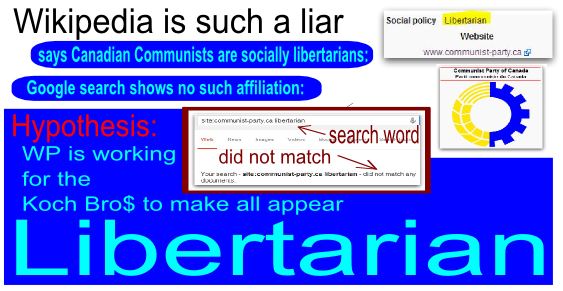
Ben's response to this was a litany of insults,which I expected, and I received his response before I managed to remove myself from the list, as I really didn't want to see it. But here it is, and it is useful within its scope; Ben uses the Internet phrase of bias by calling me a "Troll." Anyone who is a victim of predatory cooperation on the Internet is called that; the phrase originates in two places. The most important use of the term is for homeless victims who where bashed, and often killed, by right-leaning terrorists in Southern California in the early 1990s. This shows a "Nazi-like" heritage of the Internet, and the bias has a home in the Wikipedia, usually considered right-leaning and libertarian. The other derivation for the term shows "trawl," which is net dragging by fishermen; this referred to enforcers looking to make busts on the Internet with "stings." Another fishing technique is "trolling," which is hook fishing that is similar in a sense to net dragging. So "troll" in the dysfunctional minds of the biased of the Internet, can be thought of as someone who is "fishing for a fight," and hence "trolling." And this, of course, "rationalizes" bashing, which is what Ben does.
> You are the guy who trashed Phil Bolger on his final day.
I'm not responsible for your lack of reading comprehension. If you were actually capable of understanding English, you'd see that I said nothing negative about Bolger; in fact, what I wrote was a tribute.
(Note, he might have, but he would have had to have written it after the fact.)
> Now you are using various sneaky strategies to attack Herreshoff's Marco Polo, and Herreshoff with it.
Open the window and let out the crack fumes. I haven't said anything *at all* about your beloved whatever-the-hell-it-is; I haven't even bothered to look at the links you posted.
> You believe that we
You, jerkwad, are not a "we" - except for your multiple-personality disorder. You're a troll.
> You are devoid of the natural human collaborative constructs. You cannot work with others to create, but you can exploit. You cannot make, but you can take, in
> simple terms. You are a "taker not a maker."
[laugh] Have you noticed my .sig, you brainless prat? I run a large volunteer organization, and I've contributed a very large amount of my time to helping others - without pay, and simply for my own satisfactionin improving the world. You, on the other hand, are a loud-mouthed nothing, and your opinions count for less than whale dung.
>Will Ben kill?
Yes, without a doubt.
(He seems to end with, what I think is, a death threat; I would like to see that!)
Krishna was bigger than life, certainly the most thinking, emotional, and communicating cat I have ever seen. I rescued him, and probably would have found new owners for him, but he was so damn smart. He would sit with guests and try to talk. He lived with me through the Internet revolution, but I had to give him to my parents during the 2000's when conditions, including 9/11, forced me to leave NYC. They took care of him, but they are very unemotional, and that was not good for him--he often got depressed.
About six months ago, his kidneys started to fail, and yesterday morning he passed on. It was an old mouth injury from abuse that hurt him the most in the end, it had been aggravated by my parent's use of very hard treats to control him through Skinner-type behavior. A week ago he could no longer eat normal food, but they kept feeding him the hard treats making him bleed from the mouth. I had to take him. I did manage to stop the problem in his mouth, but it was too late--he was too weak from not eating for a week, and his kidneys failed completely. He understood he was dying, and I struggled internally with the idea of euthanizing him, but I could see his desire to live life as best he could to the very end, so we kept him close for his final days.
I read all I could find about the issues of dying cats and ending their lives early, but nowhere could did I see any consideration of what the animal wants, animal rights not withstanding. That I thought was amazing; all these people with expert opinions, including animal rights activists, did not even consider the possibility that dying animal might have desires, one way or the other.
He did start eating his last few days, but it was of course too late. His will to live was strong.
His body was still warm when I woke up yesterday to find he had passed on. I quickly put him in the box I had made for him, and expoxied it shut. I then took the box downstairs and put it in the early morning Sun. Our new cat, Missy, came over and investigated the box--she was wondering what had happened to Krishna.
We took him in his box to a river bank along the Housatonic, where he had played as a kitten (before the lyme tick infestation), and I buried him in the sandy loam. I partly chose the spot because I don't think it will ever be bulldozed, and it will be easy to visit even if it changes hands.
I learned a lot about cat kidney disease over the past week, and also various kinds of feeding. What amazed me is that therapies for humans with kidney disease have nearly nothing in common with therapies for cats with this disease--cats and humans are not THAT different. One might think the vets are treating reptiles instead of cats. I realize it is a long stretch to memorialize a cat, but Krishna's life was significant, and if circumstances had been better, I think his life could have had even more meaning--and been longer. So I think I will create a research wiki where my empathy model is, Wikiveristy, about treating cats in their final stages, especially with kidney disease, which is their most common old-age disorder. I also think there needs to be a discussion about the morals of euthanasia from the perspective of the cats' desires: real animal rights.
I was very glad that got to know many people, and that he recovered emotionally from the abuse that he got when he was younger.
I am finding that my photography is with me to help me share, and to make more meaning from my efforts by being able to record them. Krishna does have a very nice box, and a very nice resting place. I refinished a wine box for him, and decorated the lid with two playing polar bears taken from a vodka box. I could not find the right cloth for the lid, so I used a shirt--I had to build his box on short notice, and he needed it the morning after I finished it.
My Open EOS idea started when I looked carefully inside my newly bought used Canon XT; the mirror is very small and set back. Furthermore, it seems that the lens mounting is artificially held outward by some hollow plastic. I was aware that Argus lenses had been set inside a digital EOS using the body cap as a mounting base, and I wondered if this plastic extender could be removed to help with adapting lenses built to shorter register standards. Since we are mostly using APS-sized sensors at this point the mounting on an EOS can be brought close to the sensor, and the register size can be lower. That would allow adapter manufacturers to accommodate old Canon, Hexanon, and other small register mounts, and possibly old school rangefinder lenses. We could re-start the Soviet camera era!
By extending the free software ideas, such as with GNU/Linux, I realized further that a camera could be built to accommodate this body modification in the public domain (or more accurately, the protected public domain of open licensing). The reason I thought of this is that I have had extensive experience with public domain software such as the Linux and L4 operating systems. These systems can be adapted to work inside a Canon in the same way Canon's DryOS works. Prior to DryOS, Canon I believe that used a Unix variant called VxWorks. It so happens that VxWorks is used in common consumer wireless routers, where Linux had been previously used, and often Linux is reinstalled into VxWorks powered routers; so equipping a Canon EOS with Linux should be a snap.
Or we could just go with a rangefinder configuration, such as with the Sigma full sensor point and shoot, which is fixed-lens--unfortunately fixed to a maximum aperture opening of f4. And we can even go back to film and manual shutter as well, but with electronic timing. Then moving the concept forward again, we can bring the fully manual shutter release to the digital SLR--all from the same chassis. This is something I have discussed (1 ,2), and debated, extensively. Various mounting adapters would fill the gaps in this scenario.
I personally find the EOS "desktop" confusing; but I like Kodak's point and shoot controls on my modest c875. An OpenEOS would allow for any interface to be developed, and it could be developed quickly. I could accommodate any style and allow for fully new concepts; it could even allow for a standard desktop from which you could browse the web, and send email--with wifi of course.
I am proposing applying these ideas to the EOS. EOS does not own the mounting interfaces; if they did we would have no M42 adapters. They do own their EOS designs and DryOS.
If Sigma's fancy point and shoot had been released with the allowance for Leica or Contax RF mounts, wouldn't you get one? I have read that the Sigma sensor is better with respect to color than the others, though that info may be obsolete. Unfortunately it does not have a 35mm sensor, it is the APS-C size that is 63% of the size of a 35mm negative, as are the most common Canon and Nikon dSLRs.
My point is that we can have that, and lots more, by opening the EOS, and as it happens Cosina lens and camera corporation is perfectly positioned to do so. But would they have the inclination and the nerve? Would Canon go for it, could they collaborate?
Open software Richard Stallman invented the free software concept as it is used today--usually called "open source" which is actually a misnomer. Stallman will tell you that open source is a diluted version of his model, the GNU public licenses, what I call the protected public domain. His model attempts to force a pure sharing model, where modifications are "re-seeded" back into the field, making them available for other programmers, especially those who created the code concepts.
An idea would be to create an original open protocol cameras and lenses, but history has shown that it works best if it "liberates" the proprietary software that is already being used. Stallman "liberated" Unix software to create the top-end of the Linux system; the bottom end, the Linux Kernel was written independently by Linux Torvalds, and merged with the top end, and then joined socially by becoming GNU/Linux. Linux could replace DryOS, but I think L4, the advanced "micro kernel" would be a better platform to develop.
To extend the idea of free software to hardware, think of the IBM desktop computer; it was the first open hardware design, and look now, even your laptop is build from the original IBM specifications--it was developed back in early 80s! The desktop is so "compliant" that anyone can see the similarity. Open IS the way to go if you want design efficacy.
By keeping the design open, you naturally support "legacy" hardware, that has been the nature of the beast. Right now Linux is actually dumping some VERY old support, but that is being challenged by the free software community. Damn Small Linux, or DSL, is keeping the legacy flames alive. With a true microkernal such as L4, that would not be a problem because of its nearly purely modularized nature. Also, software can be created now that will survive for a century or more, in fact the older software, such as on early IBM mainframes, is better because it was written for less powerful machines. An even better example is the old LISP language that can fit on a legacy floppy.
Open development that utilizes a mutual effort, today called e-mutualism is financially very efficient, and would allow participating companies to quickly field offerings. 90% of business expenses fall to purely "parasitic" expenses: rent, parking, payroll taxes, paper clips, lawyer fees, executive bonuses--you get the picture. Health insurance is a big expense also, most governments cover it, but the US.
Another and easier way to demonstrate this "parasitic" effect by looking at higher education. The vast majority of college money is spent on things other than professors' salaries and rent for classrooms; the greatest teachers, Plato, Aristotle, the Buddha, Hippocrities all taught under a tree, though not the same tree. It is presently being proved that the old one-room school house gave a far better education than the huge faceless edifices of today's centralized school districts do. Small low-expense operations where "information" is shared, as in the e-mutualist model of the Information Society are the most efficient.
The free software e-mutualist movement is even more efficient as an extension of the concept of mutualism, the original framework for human development, and is now accepted as the evolutionary basis for the conceptualization necessary for technological development. To extend this point a little into the business sphere, As it happens, it is small business that recovers broken economies; small business creates all the new jobs; it certainly creates all the new technology--big business just annexes it and makes us pay for it, for the most part. I am not sure what big business does that I need to be thankful for.
The 4/3rds camera system The 4/3rds camera system that is quickly being adapted for new lenses is a very marginally open system. Most recently introduced is the Micro-4/3rds system that has a very short flange-to-sensor distance. The Micro system is creating a sensation and many adaptors are being made for it already, many more perhaps than EOS because the Micro's mounting flange is much closer to the sensor. Even older 16mm cinematographic may have a new life as Micro 4/3rds lenses. The same problems that EOS adapted manual lenses will exist though; the lenses will have to be focused with the aperture wide open, and then the aperture will have to be closed again to obtain the exposure and take the shot. And there may be focusing problems; the Olympus Micro-4/3 does not have a penta-prism or penta-mirror, it has a digital viewfinder derived from the sensor. It remains to be seen if the digital viewfinder will allow for manual focusing. Comparing 4/3rds and the EOS's common APS-C sizes The 4/3rds protocol is only marginally smaller than the most common dSLR sensor size: the APS-C. The APS-C sensor is 35% greater in size than the 4/3rds sensor. In film photography that would equate to 1/3rd stop, not a significant difference, but perhaps there are other factors in sensor technology that may create exponential differences. The Canon EOS is considered best for low light photography, and 4/3rds not so great, so far.
My Ideal RF: Component Camera
Originally my train of thought for an open EOS was more generalized thinking about an open camera when I stumbled upon a picture of the Fuji Natrua Classica and I started creating a list of criteria for an ideal rangefinder camera, and then recently I modified the criteria to meet the OpenEOS idea. The Natura Classica is a film camera with many digital features looking very much like a digital that had been modified for film--perhaps it was. Sadly it is now discontinued.
Criteria for the OpenEOS design are in the bullets below, and would not be limited to digital; the design would be adaptable to film, in fact the design criteria would not be limited to EOS, any mount system would work whose throat would be wide enough to allow the light coming from any lens onto a maximal sized sensor, presumably the 35mm-sized sensor.
The EOS flange would be pulled back as close to sensor or film plane as possible, and the adaptor to support, say common EOS lenses, would have enough space to support a number of features that will never be found in either EOS or APS-C arrangements. One of these would be auto-focus for prime, or single focus length (or non-zoom) lenses; the choice of the perfectionist, and the majority of manual focus lenses adapted to dSLR cameras. Zoom lenses with their extra glass, and more complicated optical formulas absorb much of the brightness of the light, and reduce its clarity. This adapter could also allow the lens to tilt, as a Lens Baby attachment does.
The ideal camera would fall into two categories: rangefinder-type arrangement, much like a "point-and-shoot," and SLR.
In the rangefinder focusing for manual focusing lenses it might have to have spot-center focusing where a central spot in the viewfinder is aimed by the photographer at the subject, a "beeps" tells the photographer when he has focused the lens, and then a button allows the focus to be held: a focus lock.
The SLR version might have the same arrangement but the problem facing manual focus lens users remains the same, the aperture has to be stopped down to allow for the proper exposure. The adapter could solve this problem; it could have levers built into to "un-cripple" stop down, or even automatic, metering. DSLR cameras with their in-lens engines, have done away with the aperture closing mechanisms, and the flange adpater could bring them back. The M42 mount with its small pin to stop down the aperture might mechanically be the easiest since the mechanism would have to fit in such a small "collar."
Ultimate a hybrid of the rangefinder and SLR designs might work best, that has both a traditional viewfinder and a digital finder. By keeping the design open, components could be created independently to work within the system in different ways. The Contax G1 and G2 are considered to be among the best rangefinders but are like point and shoot cameras with their auto focusing; they use an infrared beam independent of lens for "ranging."
Manual Shutter Release Unquestionably I would want a spring loaded mechanically released shutter, which would work well with a CMOS type of sensor. I attribute much of my best photography to the better "timing" allowed my finger by a fully mechanical release, and I have documented and debated the topic widely: here is a link to that writing: Empathy and the Photographer's Finger.
Here are my original notes that I created when I saw the Natura Classic:
Imagine this little plastic camera with the following:
Optional screw-on mounting components for 39mm for LTM and early Zenit, and bayonet for Leica M, Contax, and Nikon, along with its presently available Fuji auto-focus system.
A back that would be interchangeable for film and digital, and the digital back would be a retro-fit of currently available sensor technology, in all its various sizes: true 35mm, 4/3, and point-n-shoot postage stamp sensors.
The thumb and index finger controls of the Petri Color 35 for aperture and shutter speed.
A top-mounted rangefinder that would also be a viewfinder and would be removable and interchangeable. Besides the usual mirror arrangement, imagine it in either radar or sonar configurations form widely available parts that are used in robots. I am still trying to conceive of how the view finder controls would work for this, but they would look so cool in a viewfinder like my 24mm Voigtlander.
TTL metering integrated with the on-top rangefinder.
Initially I conceived that the system would be nearly fully mechanical, with only the meter needing battery, or photon, power. But as my thoughts developed further I realized that mild battery power could make the "mating" between the rangefinder/viewfinder and the lens focusing system much simpler and easier to "swap out." Also, the present auto-focus system you see in the picture would have to be powered. Then there is the issue of the digital back: that would increase the power needs I as I am proposing a full sized sensor (unlike the tiny kind that is in my otherwise respectable Kodak c875**)
I have also been focusing thought on light meters lately, and I conceived of a thumb and index finger arrangement that might give more power to the photographer. Rather than having the two controls as aperture and speed, use the electronic capabilities to make them EV value and aperture/speed ratio. The thumb would control the brightness or darkness in relation to the metering system, and the index finger would control the depth of field (and level of bokeh, of course).
Key to these ideas are the component design technologies that were introduced by IBM with the first "open systems" PC. I worked in financial technology for the "hey-day" decade of technology, and have since been supporting the next wave of technology with my writing in collaboration with the L4 OS community.
Using the well proven open design philosophy, technology would allow all these components to be built by anyone, at any level of quality (good or bad) that would fit the system for a variety of prices. The components each photographer would need would be limited to the needs of the photography situation, and all components, including the basic "chassis," would be available from secondary markets, and would be prices according to the public's perception of quality.
Like the PC computer design, the parts would fit the "backwardly-compatible model," within reason. PC motherboard manufacturers, for instance, have been very supportive of older components, eliminating "legacy" interfaces only after the components using them have long been obsolete, if at all.
Other Links about open photography: The RAW format is being addressed as an open source alternative:
http://www.openraw.org/
Birger Engineering has an open source EOS mount, if I am not mistaken, for RED cameras.